


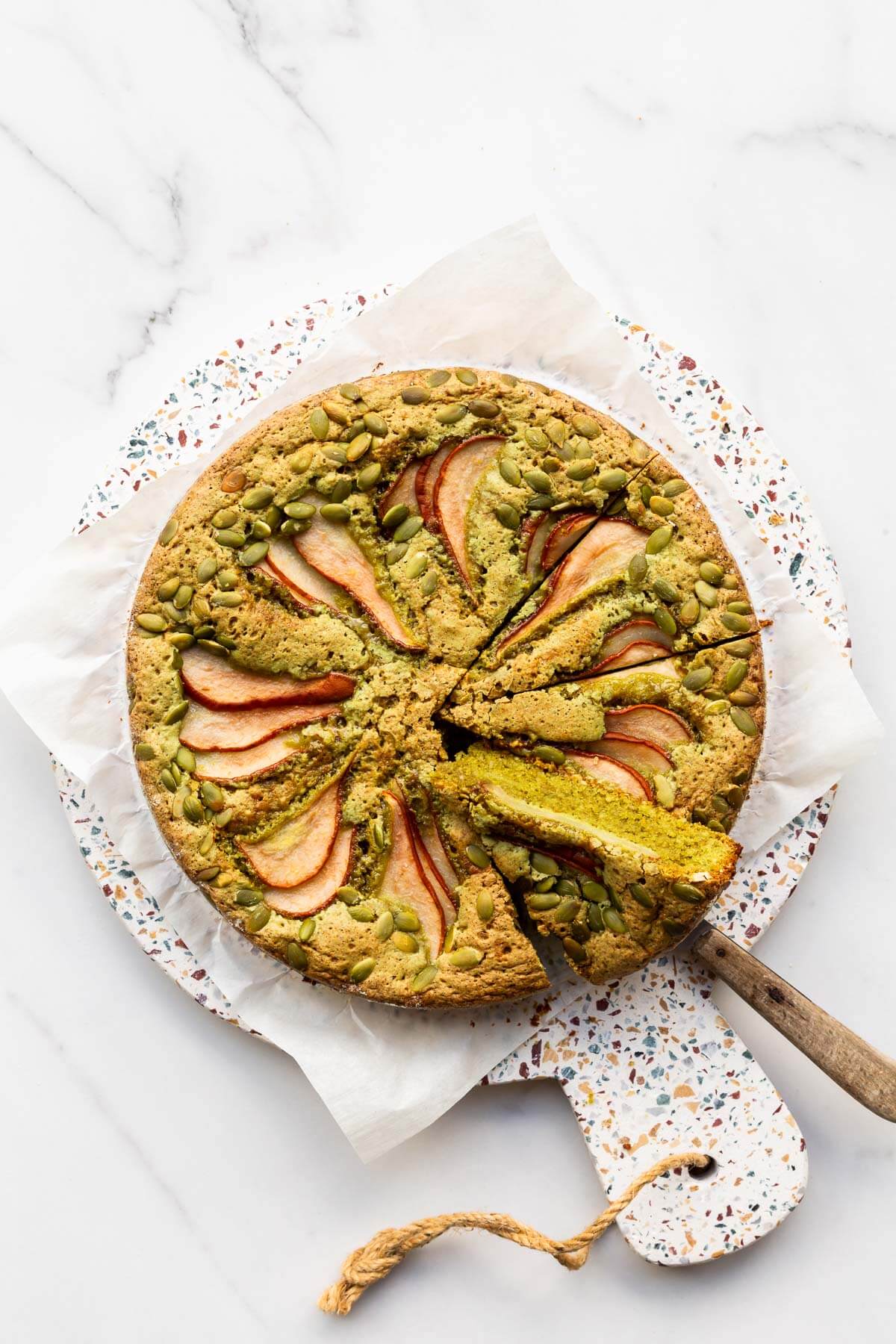
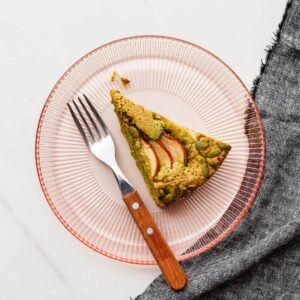
Learn how to make the best pumpkin seed cake with this easy recipe. This moist pumpkin seed cake gets its intense green colour and nutty flavour from ground pumpkin seeds and roasted pumpkin seed oil, a light, sweet seed oil that is great in sweet recipes and desserts. Garnish the cake before baking with extra pumpkin seeds and thinly sliced pear to celebrate fall.
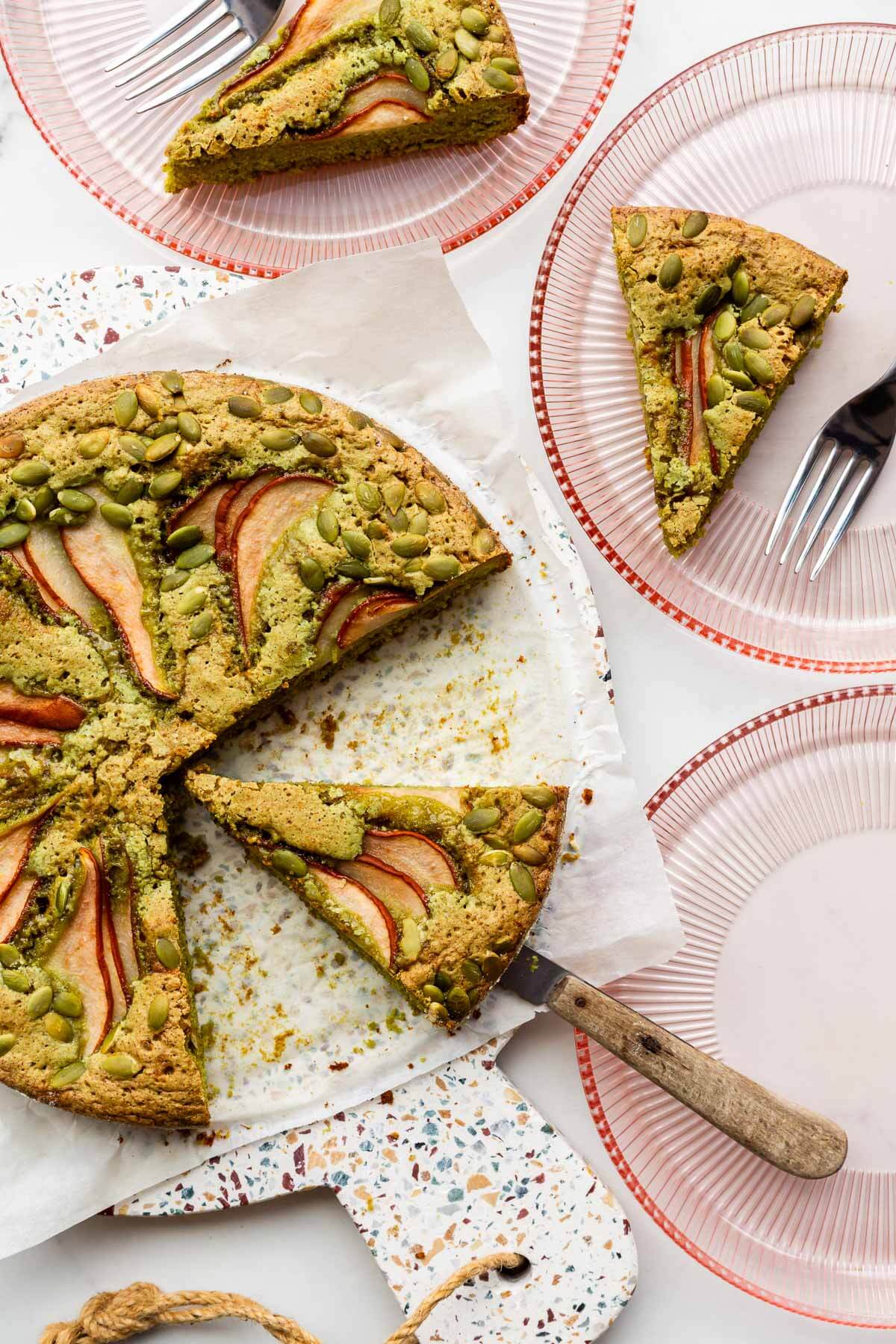
I love the combination of almond frangipane filling in tarts with fall orchard fruit, especially apples and pears. This pistachio tart topped with sliced peaches follows that idea, too! This pumpkin seed cake is loosely based on the same idea and when I heard bottles of delicious roasted pumpkin seed oil were available at my local Costco, I decided it was time to explore this cake I'd had in my head for so long.
Jump to:
Pumpkin Seed Cake Ingredients
Roasted pumpkin seed oil and pumpkin seeds give desserts a nutty flavour without the nuts. Some liken the flavour of the oil to toasted hazelnuts even!
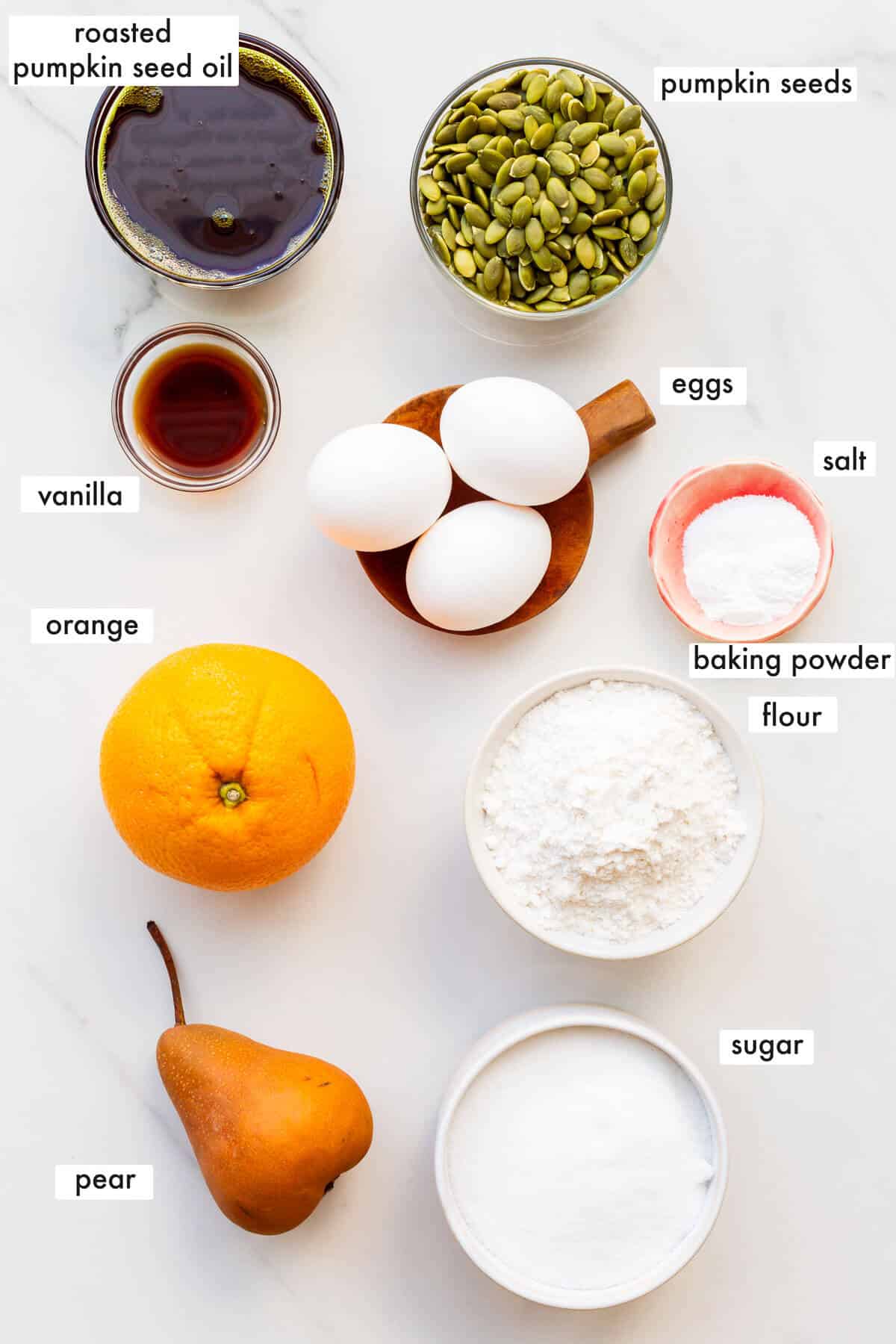
- eggs-this recipe was tested with large eggs. If you use eggs that are smaller or larger, results may vary
- sugar-we are using granulated sugar for this cake because we don't want the sugar to interfere with the delicate, nutty flavour of pumpkin seeds
- pumpkin seeds-get your shelled pumpkin seeds at a bulk food store or somewhere with a high turnover rate so you are baking with the freshest, best-tasting seeds
- pumpkin seed oil-I tested this pumpkin seed cake with roasted pumpkin seed oil (available at some Costco locations)
- flour-I test all my recipes with regular bleached all-purpose flour
- salt-this recipe was tested with Diamond Crystal fine Kosher salt. If using regular table salt or another kosher salt, add half the amount of salt to avoid making the dessert too salty
- leavening-use baking powder to help the cake rise and maintain the air in the batter. The pumpkin seeds, as well as the garnishes on the cake can weigh the crumb down otherwise. Remember baking powder is not the same as baking soda. If you're confused, read about baking powder versus baking soda
- vanilla extract-I flavoured the cake batter with pure vanilla extract. If using artificial, you may want to add a little less, as it's more potent
- orange (optional)-I used a navel orange for the zest to flavour the cake batter and used the juice to keep the pear slices from browning
- pear (optional)-Bosc pear works great, as does Bartlett, Anjou, or Forelle.
Please see the recipe card for exact ingredients and quantities.
Substitutions and Variations
If you know how to make the recipe fit a certain diet, let the reader know here. Don't fake it - only provide guidance on topics you have actual experience with.
- Gluten-free - I tested a gluten-free version of this recipe, replacing the all-purpose flour with millet flour, gram-for-gram, skipping the pear garnish, as generally sliced fruit and berries baked over gluten-free cakes tend to sink to the bottom. This didn't work well as the resulting cake was overly sweet and had a substantial crunchy crust on top (akin to meringue). I believe the technique would have to be modified for millet flour. I haven't tested cup-for-cup gluten-free flours, but these may work as they contain xanthan gum.
- Lemon - you can replace the orange with a lemon, using the zest to flavour the cake batter.
- Apple - this cake would be great with apple instead of pear. Use a Cortland apple or another variety that is good for baking.
- Berries - this would be great with raspberries in place of the sliced pear and would be stunning.
- Rhubarb - replace the sliced pear with rhubarb (check out this moist rhubarb cake made with pumpkin seeds).
- Almond - you can make an almond cake using the same recipe, replacing the pumpkin seeds in the batter with ground almonds and the pumpkin seed oil with almond oil.
- Pistachio - you can make a pistachio version of this cake, replacing the pumpkin seeds with ground pistachios, and the pumpkin seed oil with pistachio oil (or almond oil to save a little money).
How To Make A Cake With Roasted Pumpkin Seed Oil
Because this moist cake is oil-based, we whip the eggs with sugar to aerate the cake batter and create volume and stability. This is a similar technique to sponge cakes and génoise.
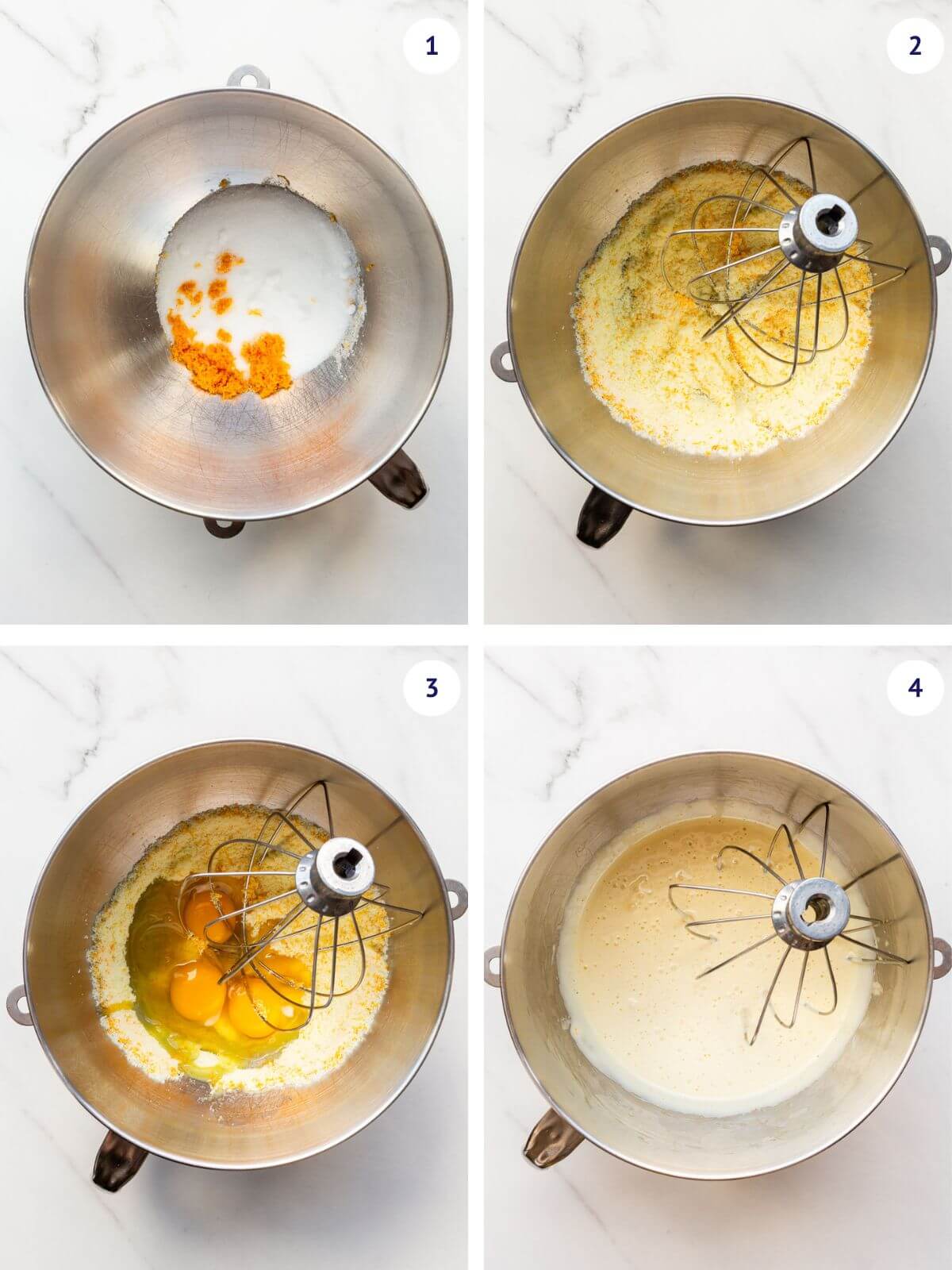
Step 1-Combine the orange zest with the granulated sugar. Mix it on medium-low with the whisk attachment of the stand mixer (image 1) to extract the orange oils into the sugar (image 2). Add the eggs (image 3) and whip until the mixture reaches the ribbon stage, where the eggs are thick, glossy, aerated and light (image 4).
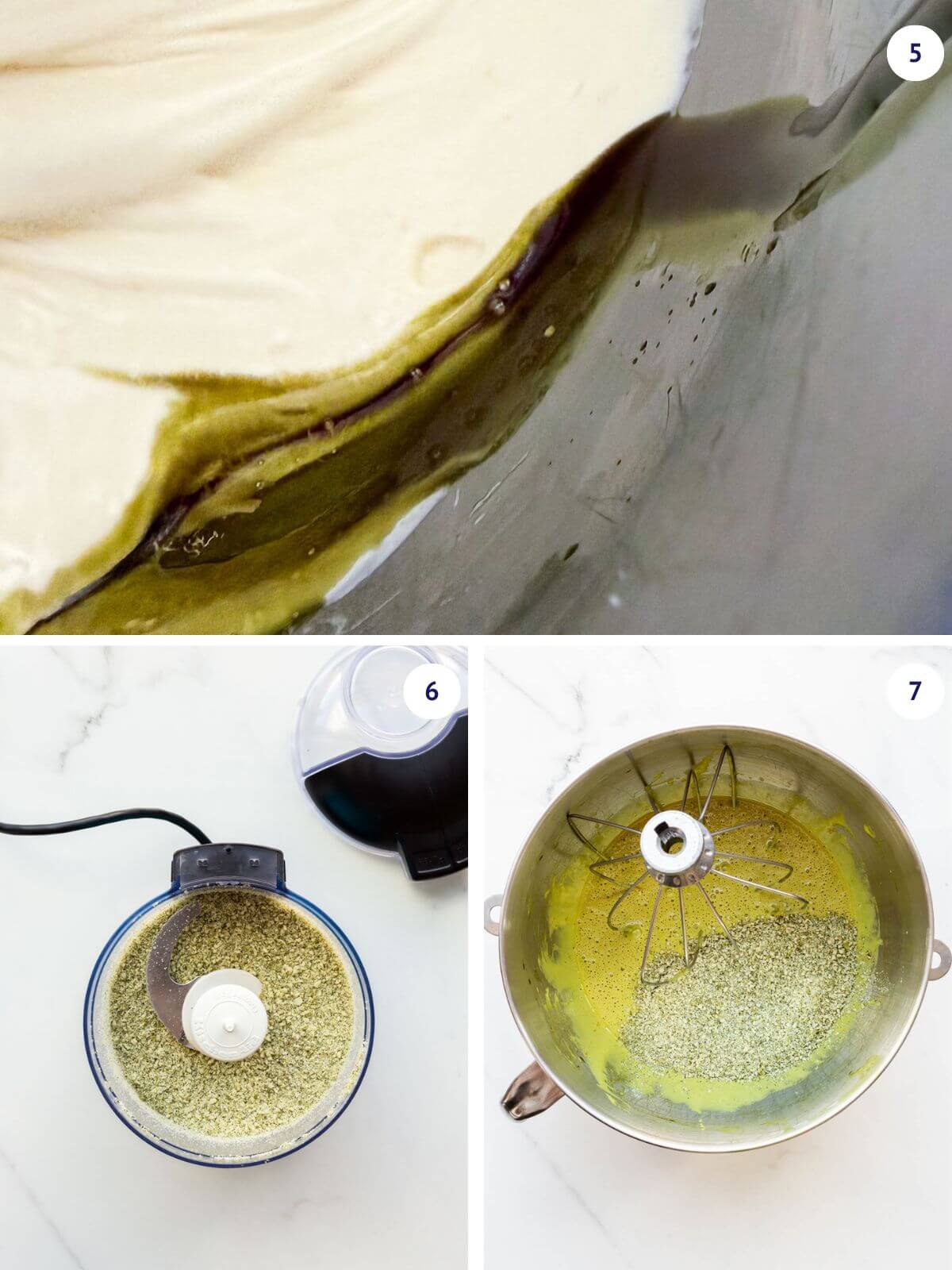
Step 2-Slowly drizzle the pumpkin seed oil with the mixer running on medium-low to emulsify the mixture (image 5). Grind the pumpkin seeds in a mini food processor (image 6), then add them to the mixer bowl and stir them in on low (image 7).
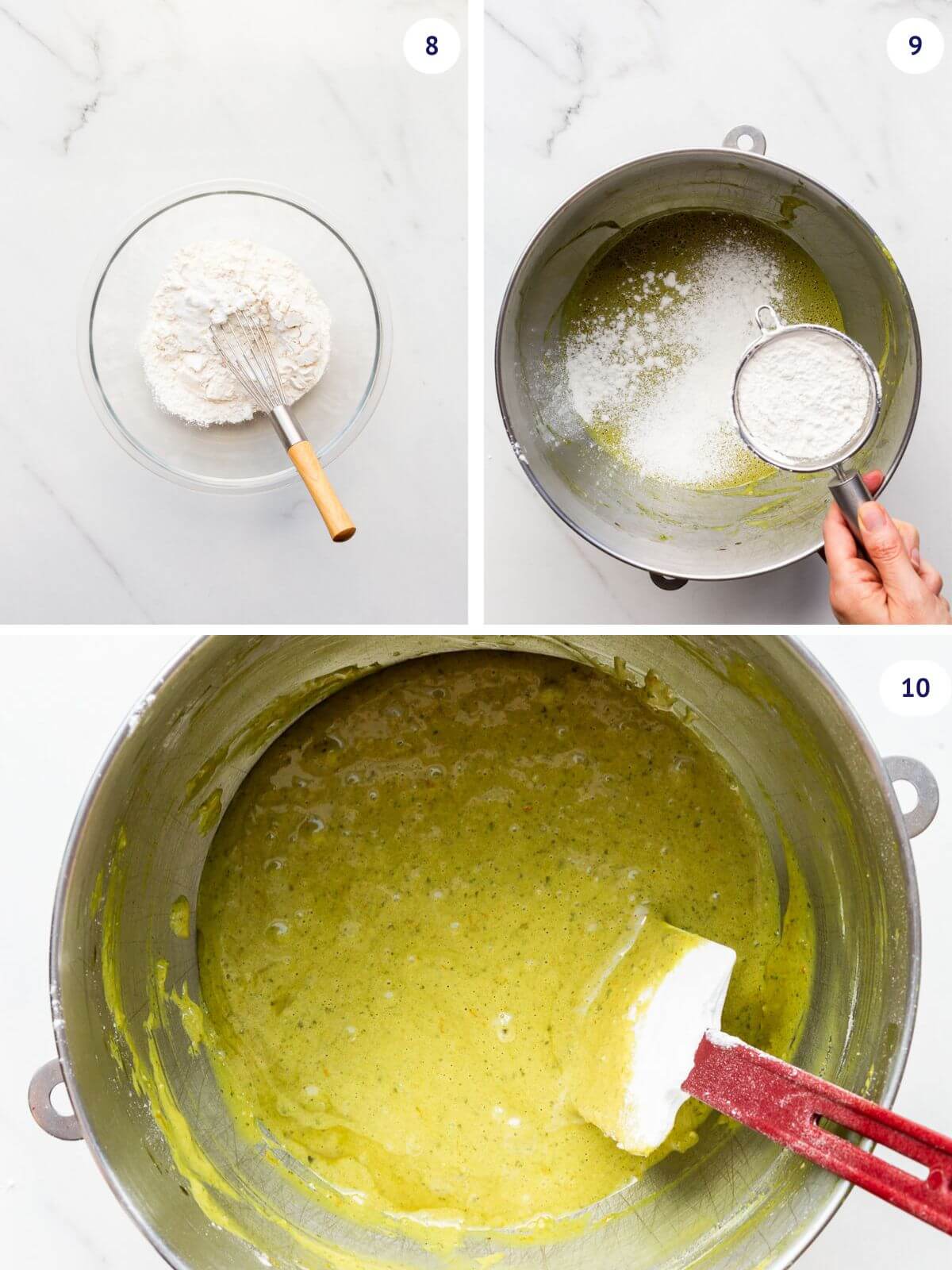
Step 3-Whisk the dry ingredients separately in a small bowl to combine them (image 8), then sift them over the cake batter (image 9) and fold them in with a spatula (image 10).
Note: You can whisk the dry ingredients into the cake batter with the stand mixer, but I sometimes end up with pockets of dry ingredients and an uneven batter, and it takes more mixing (and increases the potential for gluten development!). I prefer to fold them in.
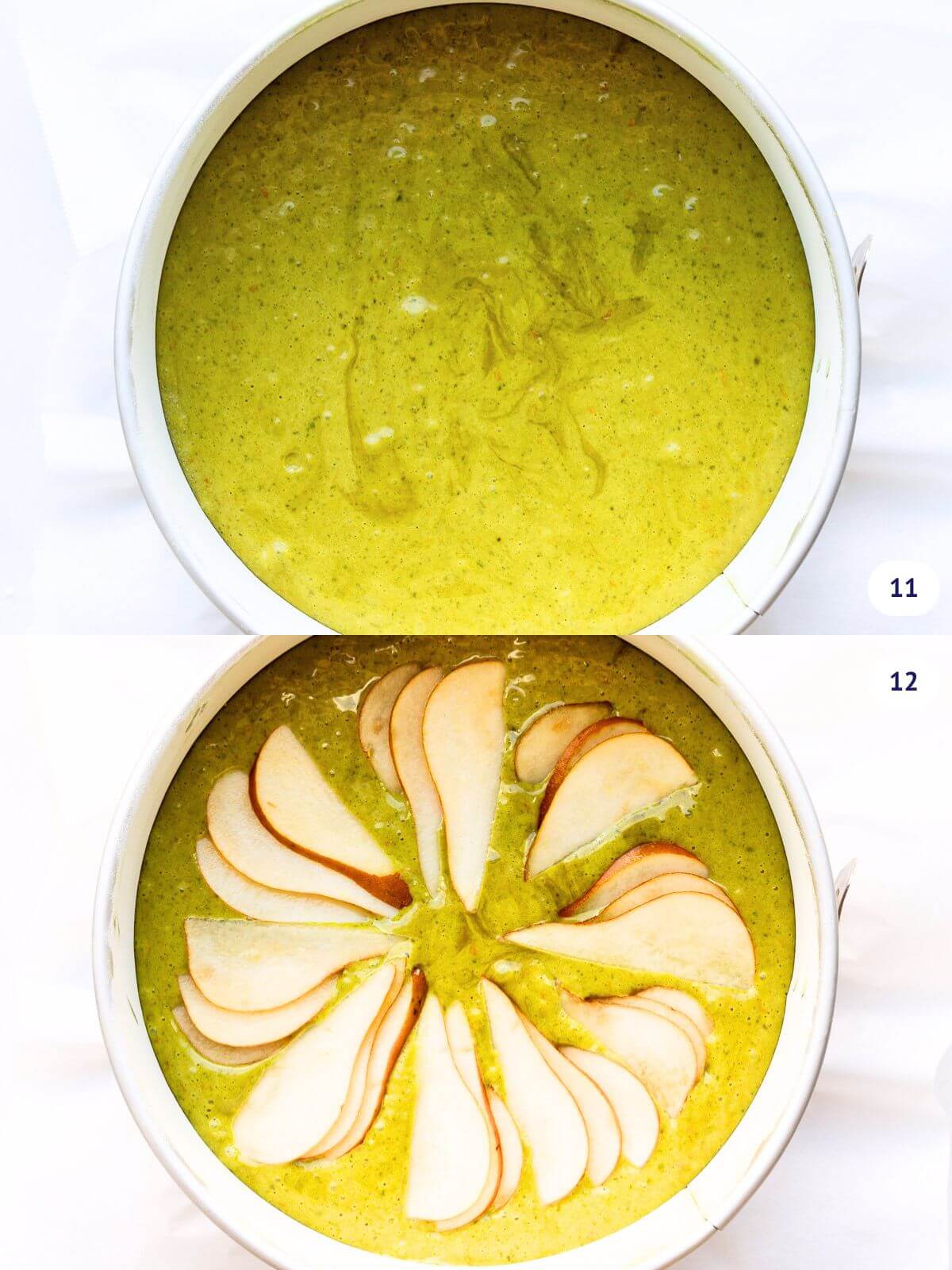
Step 3-Transfer the batter to an oiled 9-inch (23 cm) springform pan lined with parchment (image 11). You can also dust the edges with flour before transferring the batter. Then garnish with thinly sliced pear if using (image 12).
Tip: brush the pan with some of the roasted pumpkin seed oil!
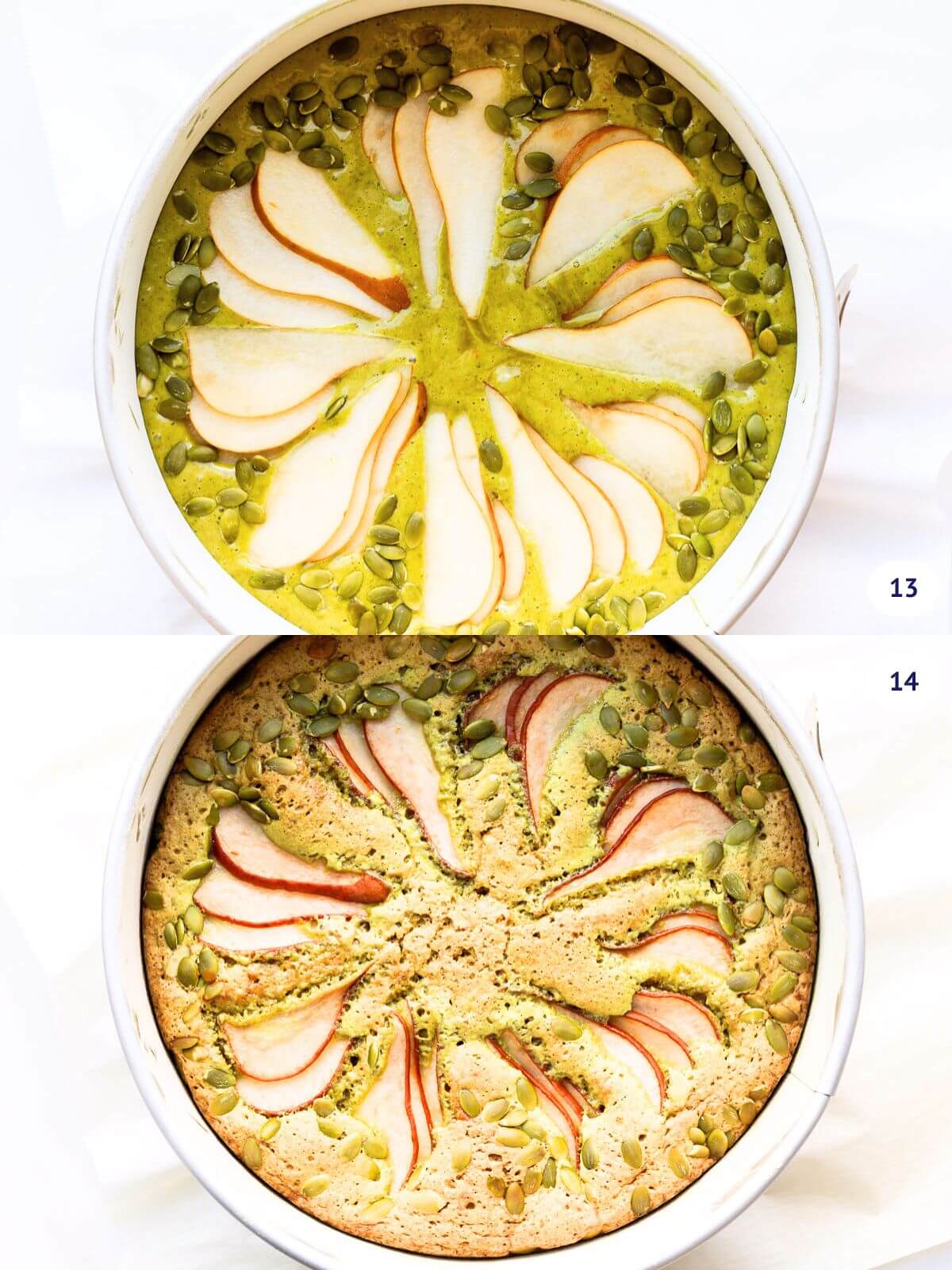
Step 3-Garnish with extra pumpkin seeds (image 13), then bake until the edges are golden brown and pull away from the sides of the pan (image 14). Run a thin knife along the edges of the pan to loosen the cake and prevent sticking about 10 minutes after you take the cake out of the oven. You can unmould it and let it cool completely on a wire rack before serving.
Hint: use a cake tester inserted into the centre to ensure the cake is done baking.
Storage
This cake keeps up to 4 days at room temperature, covered.
Pumpkin Seed Oil FAQs
With its low smoke point, roasted pumpkin seed oil is great for baking, but not for cooking, as it breaks down and develops burnt, off flavours easily, especially with direct heat. Remember, baking is gentler than pan-frying or deep-frying, and the internal temperature of a cake doesn't go above 200-210 °F (93-99 °C), while the smoke point of roasted pumpkin seed oil is around 248 °F (120 °C).
Related
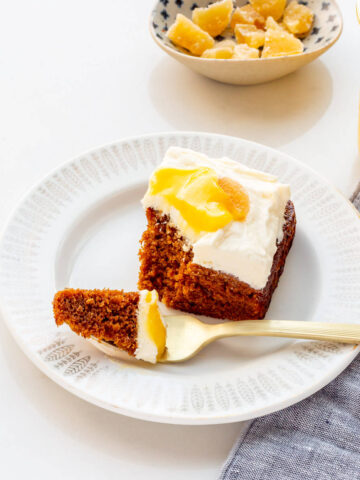
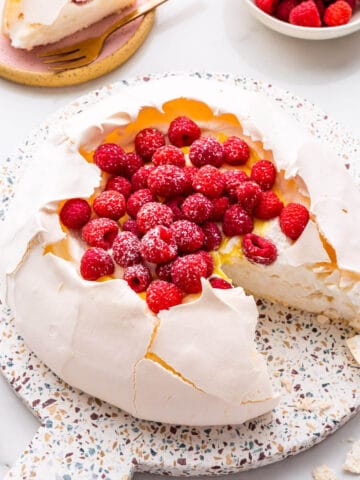
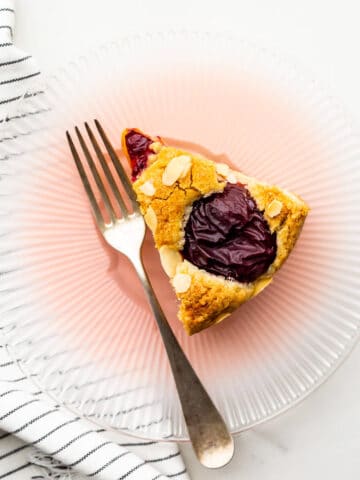
If you love the simple elegance of one-layer cakes as much as I do, try these:

If you tried this recipe for pumpkin seed cake (or any other recipe on my website), please leave a ⭐ star rating and let me know how it went in the comments below. I love hearing from you!
📖 Recipe
Pumpkin Seed Cake
Ingredients
- 200 grams granulated sugar
- 1 Navel orange(s) zested
- 3 large egg(s)
- 5 mL pure vanilla extract
- 125 mL roasted pumpkin seed oil
- 108 grams pumpkin seeds plus more for garnishing before baking
- 125 grams bleached all-purpose flour
- 7.5 mL baking powder
- 2.5 mL Diamond Crystal fine kosher salt
- 1 pear(s) Bosc or Bartlett, approximately 150-200 grams
Instructions
- Preheat the oven to 350 °F (175 °C). Grease a 9-inch springform pan and line the bottom with parchment paper. You can also dust the sides with flour to ensure the cake unmoulds easily. Set aside.
- In the bowl of a stand mixer fitted with the whisk attachment, combine the granulated sugar with the orange zest. Mix on medium-low to extract the oils from the zest. The mixture should be very fragrant.
- Add the eggs and whip the mixture on medium-high until very thick, glossy, aerated, and light in colour. This takes 3-5 minutes.
- Mix in the vanilla, then drizzle in the pumpkin seed oil on medium-low speed, trying to avoid the whisk so it doesn't splash too much. The mixture should be thick and a vibrant green colour.
- In a mini food processor, grind the pumpkin seeds to the consistency of ground almonds. Add the ground pumpkin seeds to the mixer and mix on low.
- In a separate bowl, whisk together the dry ingredients (flour, baking powder and salt).
- Detach the whisk attachment and remove the bowl from the stand mixer.
- Sift a third of the dry ingredients over the bowl of cake batter. Fold it in with a large spatula, then add another third, folding it in, and finish with the last of the flour. Fold until the flour disappears being sure to scrape from the bottom of the bowl.
- Transfer the cake batter to the prepared cake pan.
- Core and thinly slice the pear, arranging the slices on top of the cake. Garnish with a few extra pumpkin seeds.
- Bake until the edges are golden brown and begin to separate from the sides of the pan. A cake tester inserted into the centre of the cake will come out clean. It takes about 45-50 minutes.
- Let the cake cool for 10-20 minutes before running a knife around the edge between the pan and the cake before unmoulding it. Let it cool completely before serving plain or with vanilla ice cream or whipped cream.
Notes
- Soak the slices of pear in the orange juice to coat them if you slice them ahead of time so the fruit doesn't brown. Blot the pear slices with paper towels before arranging them over the cake batter.
- You can replace the orange with lemon.
- You can garnish the cake with sliced apple instead of pear or scatter a few berries like raspberries.
- I've tested a gluten-free version with millet flour without the sliced fruit (as the cake lacks structure, the fruit would likely sink). I didn't find this worked well and suspect the mixing method would have to be modified for this substitution to work. I recommend using a gluten-free cup-for-cup flour blend instead, which contains xanthan gum.
Explore More With AI
Nutrition
Nutrition information is automatically calculated and should only be used as an approximation.
Leave a Reply