


Some recipes suggest using the middle oven rack to bake cookies; others suggest using the bottom oven rack to bake pie. You may naturally choose the middle rack for cakes. Does the oven rack position matter? What oven rack position should you bake with?

My oven racks' default positions are the middle and bottom racks. Most of the recipes I bake use these positions. But for specific recipes, I may use one or the other, and they cannot be used interchangeably.
Jump to:
Basic Oven Rack Positions
Most ovens have 5 or 6 rack levels, and each serves a different purpose:
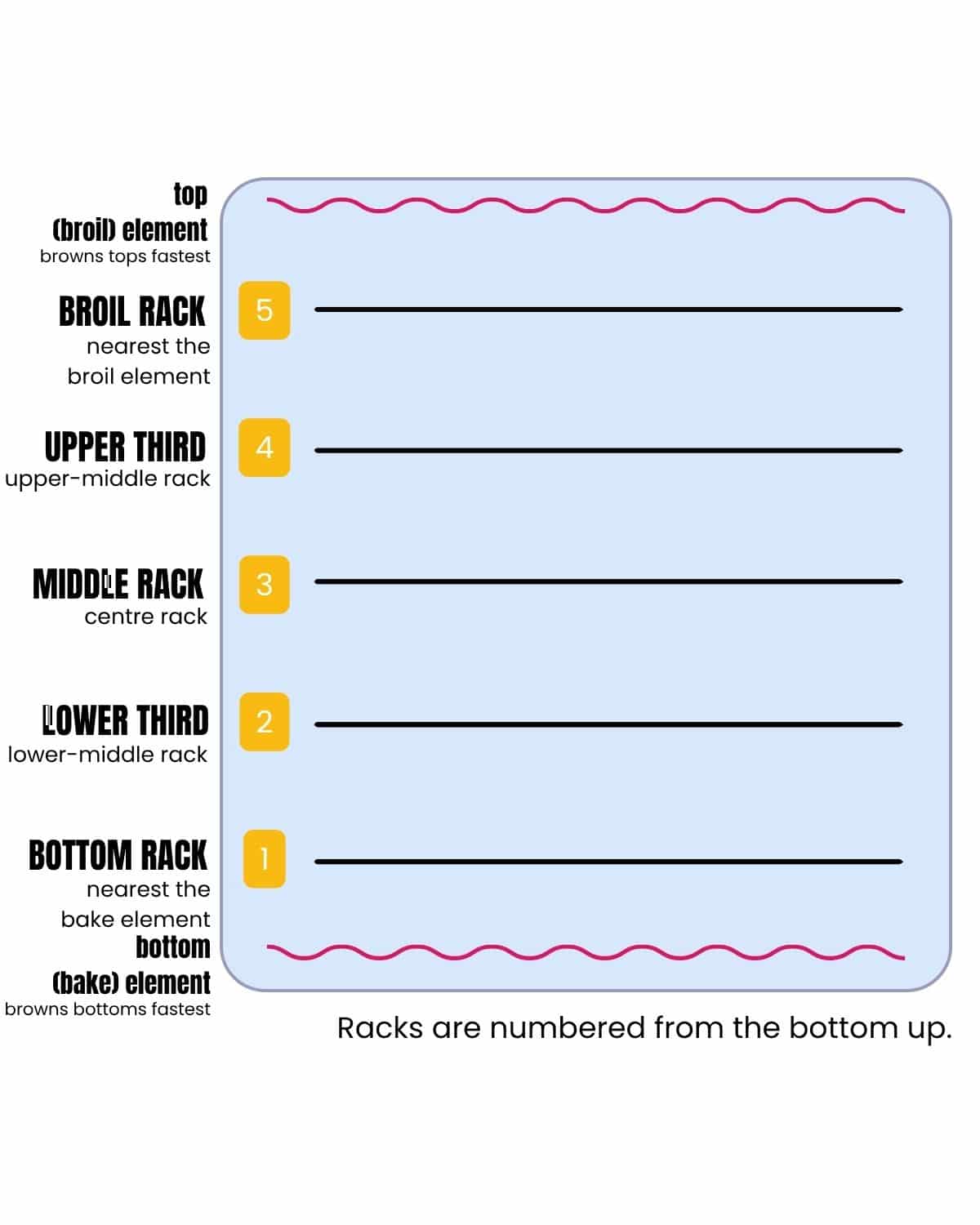
- The top rack is for broiling and browning (rack 5). It's closest to the top heating element. When you set your oven to the "broil" setting (as opposed to the "bake" setting), only the top element heats up, and the heat of the oven is concentrated towards the top of the oven. When you want to brown the top of a casserole, the cheese on top of a lasagna, or caramelize the sugar on top of crème brûlée, you will use the top rack for these specific baking tasks.
- The middle racks are for even baking (racks 2-4). You likely have 3 middle racks. These racks are evenly spaced and approximately halfway between the top and bottom heating elements. Use the middle racks when you set your oven to "bake" for baked goods that you want to feel an even heat (not too hot on top, and not too hot on the bottom).
- The bottom rack (rack 1) is for recipes that require more directed heat on the bottom. Any baked goods that you have trouble baking through on the bottom specifically should be baked on the bottom rack, which will benefit from the heat of the bottom element concentrated on the bottom of the baking pan.
Note: Some oven manufacturers may number the racks in reverse, where the top rack is number 1 and the bottom is number 5. The principles are the same. Some ovens have 6 racks, instead of 5, but again, the role of each rack is the same, but in this case the top rack is 6 and the bottom is 1, and the middle section has two racks, racks 3 and 4.

Cake And Cookie Oven Rack Guide
- Top oven rack: you will use the top rack for these specific baking tasks:
- To brown the top of a casserole or the cheese on top of a lasagna or a gratin
- To caramelize the sugar layer on top of crème brûlée in the oven.
- Middle racks: these are especially useful for cakes and cookies. These require even heat, when you don't want heat concentrated on top or on the bottom of the baked goods.
- Bottom rack: bake pies on the bottom rack. Pie filling is quite insulating and prevents the bottom crust from cooking so you need more heat directed to the bottom of the pan. Baking and browning the bottom crust of a fruit pie can be very difficult. You need more heat directed to the bottom crust to help it cook, which is why using the bottom rack is your best best! A pizza stone or baking steel will speed up the process even more.
| Rack Position | Label | Best For | Heat-Element Notes |
|---|---|---|---|
| 5 | Top rack | Broiling, melting cheese, quick browning | Closest to the broil element. Food can burn in seconds, so watch it closely and keep the oven door slightly ajar if your manual says to. |
| 4 | Upper-middle rack | Browning tops of casseroles, toasting nuts, puff pastry | Top heat is stronger here. In bake mode the upper element cycles on and off, so tops brown faster than bottoms. |
| 4 | Upper-middle rack | Cookies or cakes if using multiple pans | Use this upper middle rack if you have too many pans to fit on the middle rack. You will have to rotate pans and switch positions partway through baking time to ensure even baking. |
| 3 | Middle rack | Cookies, cakes, scones, bread | The most even heat, with equal distance from the top and bottom elements. This is the default position for most recipes. |
| 2 | Lower-middle rack | Cookies or cakes if using multiple pans | Use this second middle rack if you have too many pans to fit on the middle rack. You will have to rotate pans and switch positions partway through baking time to ensure even baking. |
| 1 | Bottom rack | Pies, pizza, roasting large cuts | Closest to the bake element, so bottoms brown fastest. Use a sheet pan underneath to catch drips and prevent scorching. Use a preheated baking steel or pizza stone to ensure baked goods get sufficient heat directed to the bottom. |

Utilizing Multiple Rack Levels
As you become a more skilled baker, you will likely start to transition to using different racks for different stages of baking:
- You may start a pie on the bottom rack to ensure the crust gets a good amount of heat early on, then you may slide your pie to the middle rack to finish heating the pie all the way through.
- You may begin to bake casseroles on the middle shelf, then in the last 10 minutes, move the pan to the top rack to broil, creating a delicious golden-brown top that you would never achieve on the middle rack.

Baking On Two Racks Simultaneously
You might find yourself baking two sheet pans of cookies at once, but technically, your oven only has one true middle rack! You have two choices:
- Bake the two pans separately on the middle rack, one at a time. When the first is done baking, take it out and slide the second pan in.
- Bake both pans at the same time, using the first and third middle rack positions, leaving the true middle rack empty.
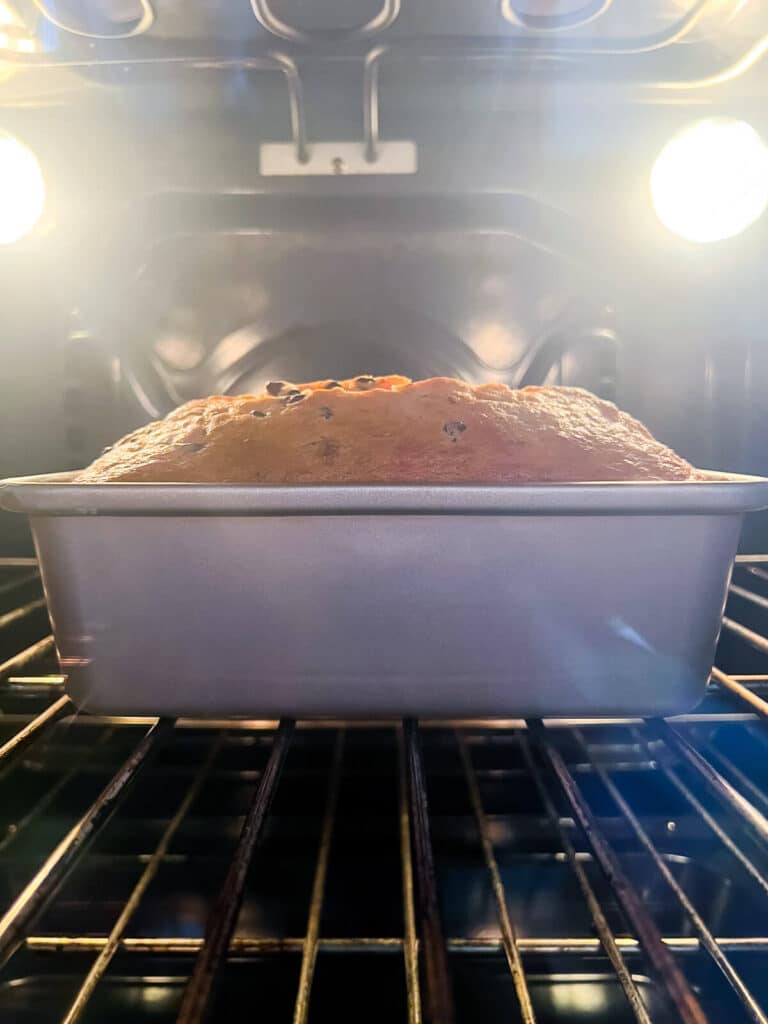
If you bake multiple sheet pans of cookies or cake layers at the same time, rotate and swap the pans partway through the bake time to ensure even baking.
How To Know Which Rack To Use
Once you know where you are headed, you can adjust your baking rack positions accordingly and utilize your oven's full potential.If you are ever unsure of which oven rack position to use (or if the recipe doesn't specify), ask yourself a few questions to establish what your goal is:
- Do I want to caramelize the top of something? Brown cheese? Crisp up the top? Use the top oven rack position in conjunction with the broil setting!
- Am I worried the bottom of my baked goods won't bake properly? Use the bottom oven rack in conjunction with the bake setting!
- Do I want an even bake throughout? Use the middle oven rack position in conjunction with the bake setting.
Here's a rundown of recipe categories and which oven rack to bake them on:
| Recipe Type | Oven Rack Position |
|---|---|
| Cookies | Middle oven rack |
| Cakes | Middle oven rack |
| Scones | Middle oven rack |
| Bread | Middle oven rack |
| Pie | Bottom oven rack with a sheet pan under the pie plate to catch drips Preheated baking steel or pizza stone preferable |
| Fruit crisps and crumbles | Middle oven rack with a sheet pan under the baking dish to catch drips |
Oven RACK Position FAQs
I always bake cookies one sheet at a time on the middle rack. To bake two sheet pans at once, place one on the middle rack and the other on the bottom-third rack, then swap the pans a couple of minutes before the timer goes off. Make sure the cookies have enough time to heat up and set before you switch their positions, or you risk affecting their texture. They may collapse from moving the pans and the temperature change.
I always bake pies on the bottom oven rack. If possible, preheat the oven with a pizza stone or baking steel on the bottom rack for an hour before placing the pie on the stone or steel. For pies that may drip, you can place them on a sheet pan-preheat the sheet pan on the stone or steel and place the pie on top.
I always bake cakes on the middle rack. If you're baking multiple layers of cake, leave enough space between the pans and the oven walls. If your oven is small, you may have to use two racks; in that case, place pans on the middle and bottom third rack, swapping pans partway through the bake. Make sure the cakes have mostly set before opening the oven and switching the positions of the pans; bake the cakes at least two-thirds of the time before switching positions.
If you set your oven to "bake," it may preheat with both the top and bottom heating elements, then once it reaches the set temperature, it will likely switch to heat with just the bottom element. If you set your oven to "broil," only the top heating element will turn on.
For baking cakes, pies, cookies, and most other desserts, use the oven's "bake" setting, baking with the bottom element after preheat is complete. The bottom element ensures your pans get enough heat to heat the bottom of your baked goods without overbaking or burning the tops too quickly, which can happen if you bake with the top heating element.
For bread, whether yeasted or sourdough, always choose the middle rack. If you are baking in a cast-iron vessel (like my favourite double-Dutch oven), preheat the oven with the baking vessel on the middle rack for at least 30 minutes (usually I do a full hour). This ensures the pan is very hot before you put the bread in. You will get better oven spring this way (more pouf!). You could also bake bread on a preheated baking steel or pizza stone. Again, preheat the steel or stone for up to an hour before placing the bread on top. You can cover the bread with a lid, like a large inverted bowl, to ensure enough steam forms a good crust. If not, you can mist the bread's surface with water or toss ice cubes into the oven to create steam.
Your bakeware should not touch the oven walls, and there should be a gap (at least 1 inch all around) between the pans and the wall. This ensures better air circulation and heat distribution. If you use a sheet pan that literally takes up the entire rack, from wall to wall, you risk. blocking the heat from rising, and the tops of your baked goods may not bake properly, leading to collapse.
Whether you are baking with convection or not doesn't affect which rack you choose. Bake breads, cookies and cakes on the middle rack, pies on the bottom rack, and anything you want to brown on the top rack.
If you found this deep-dive on oven rack positions in baking (or any other article on my website), please leave comments below. I love hearing from you!


Leave a Reply