


If you've ever baked a batch of blueberry muffins and noticed the blueberries turned green instead of purple or blue, that's normal! Keep reading to find out why blueberries turn green in your muffins and baked goods!
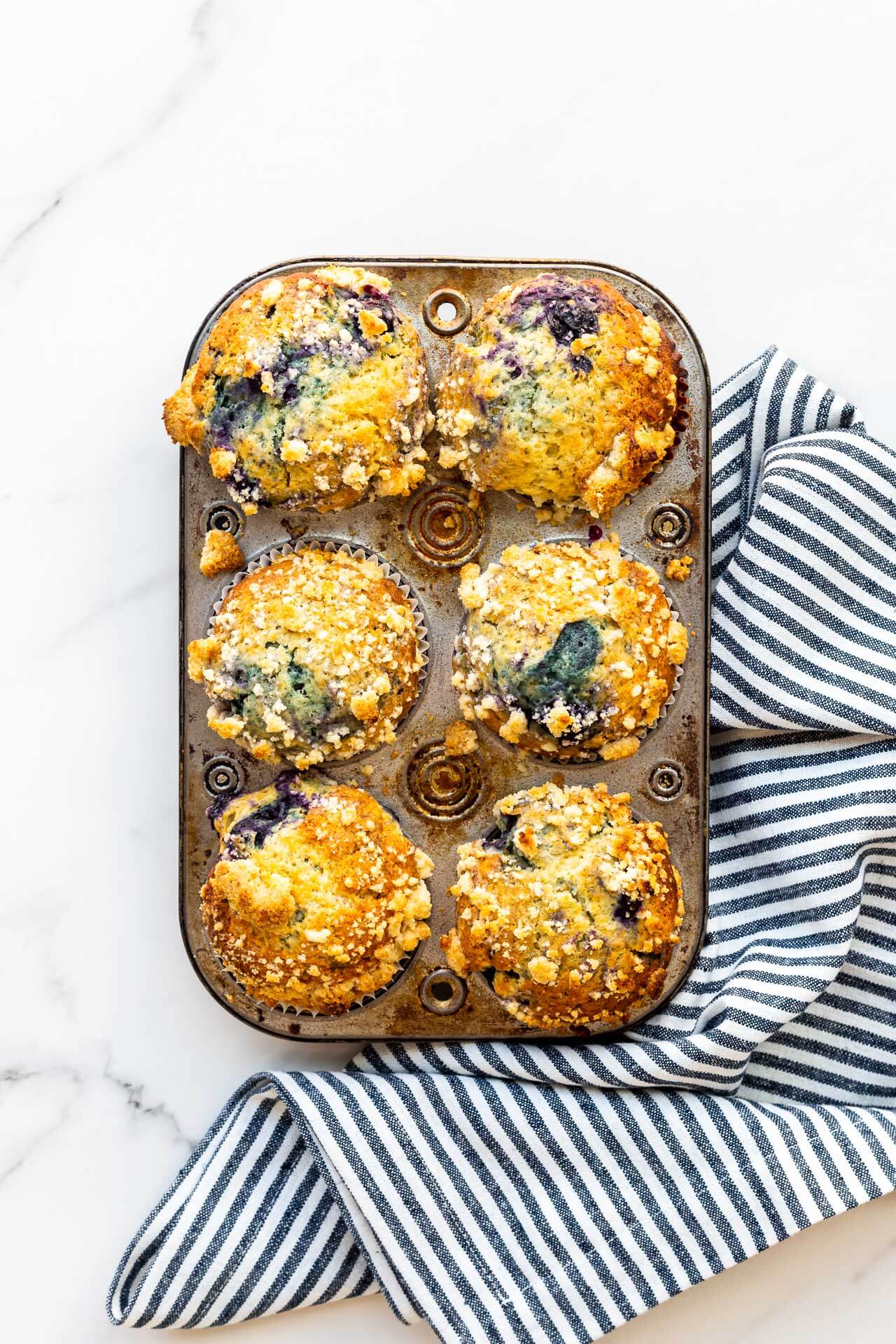
It happens to the best of us: you bake up a batch of moist and sweet honey blueberry muffins, made with care and love, but they end up with unsightly green blobs of what should have been pretty purple-blue blueberries. The taste is the same, but the colour of the blueberries isn't what you expected. That, my friends, is anthocyanin's fault. But actually, to be more precise, the pH of the muffin batter also has a role in this story.
Jump to:
What Are Anthocyanins
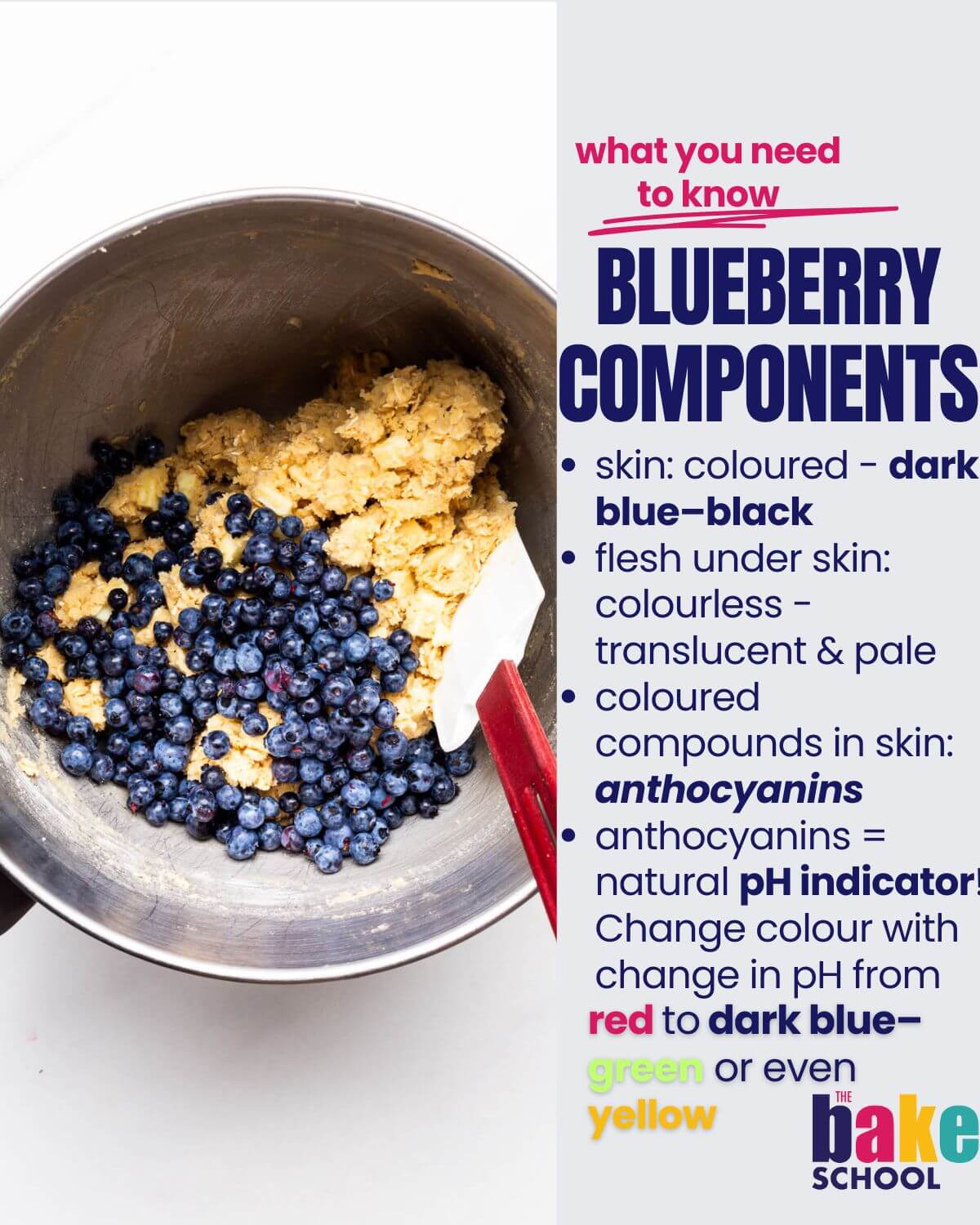
Anthocyanins are a family of coloured compounds. They are the antioxidants in plants, like leaves and berries, and they are responsible for much of the colour you see on the tables at the farmer's markets, from red cabbage and purple corn to many different types of berries, cherries, and grapes. The anthocyanins are not to be confused with the carotenoids (like beta-carotene): carrots get their orange colour (and even purple colour) from beta-carotene, while the skins of blueberries get their violet-blue tones from cyanidin 3-glucoside (an anthocyanin).
Why Do Anthocyanins Change Colour
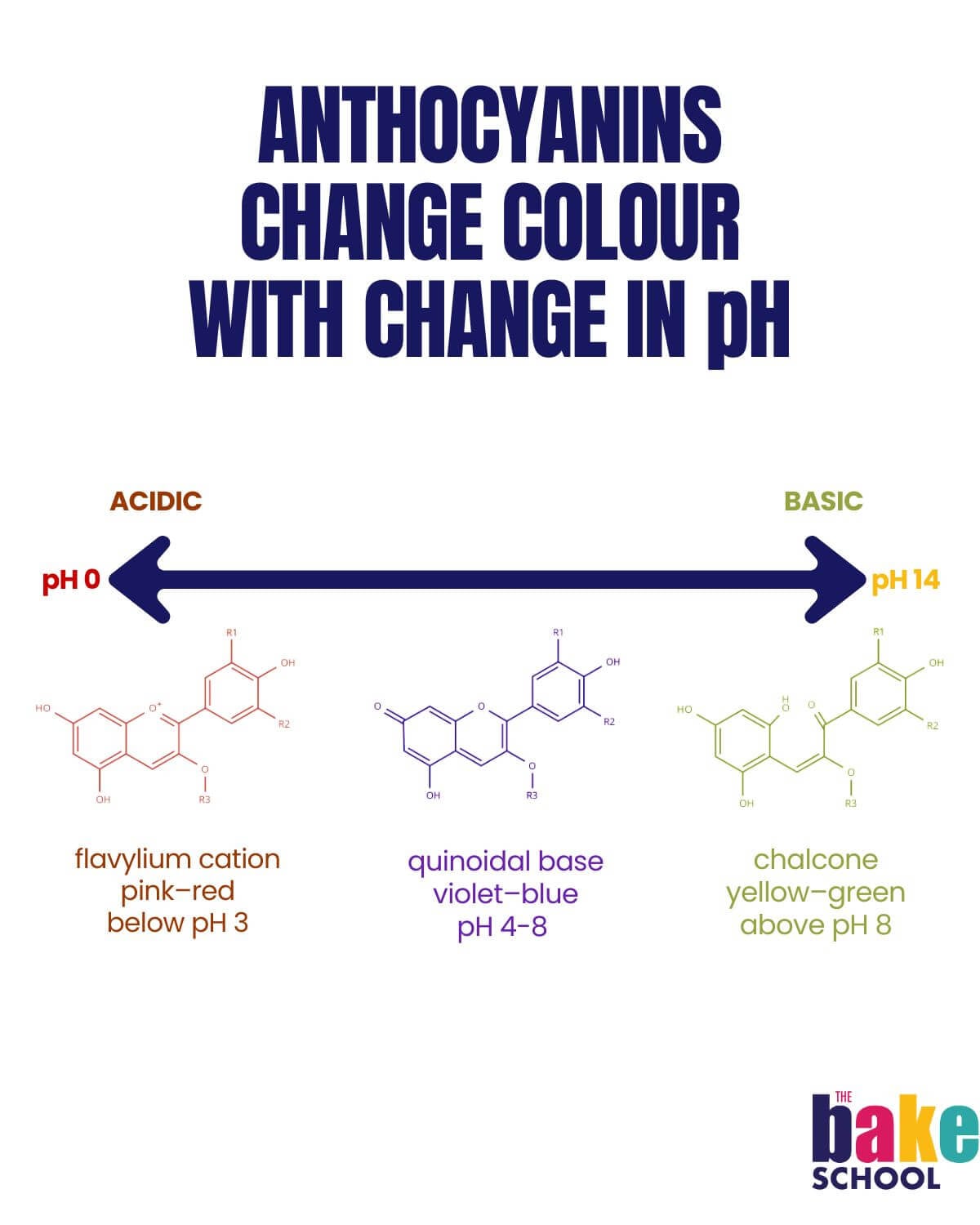
Anthocyanins are nature's pH indicator: these compounds change colour depending on whether they are in an acidic, neutral, or basic (alkaline) environment. The colour changes observed vary from one anthocyanin to another, but for cyanidin 3-glucoside, the anthocyanin found in blueberries, the colour varies from red to violet to blue or even green (from low, acidic pH to higher, alkaline pH). A change in pH entails a small change in the structure of anthocyanins, which in turn affects how they absorb/reflect light: change the pH, change the colour of these compounds.
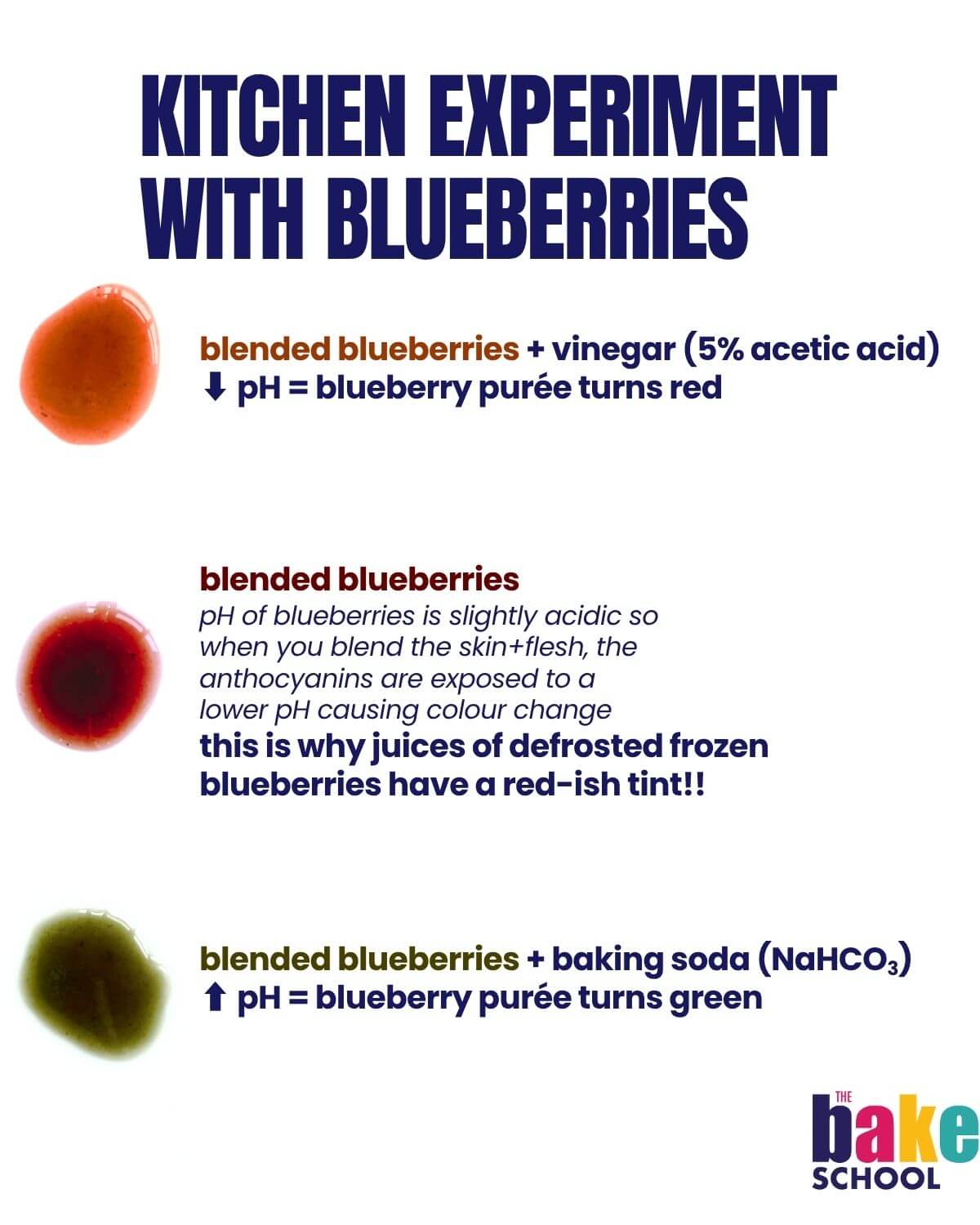
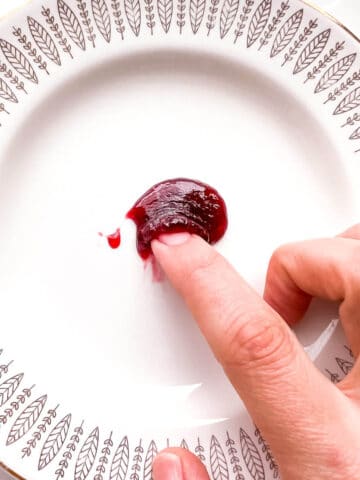
I did a simple experiment in my kitchen, blending a sample of fresh blueberries to form a purée. Then I mixed the purée with either dilute vinegar (acetic acid) to lower the pH or with a solution of baking soda (sodium bicarbonate) in water to raise the pH. I immediately observed a colour change in both cases: at a lower pH (with vinegar), the blueberry purée turned red; at a higher pH (with baking soda), it turned green.
I also noted that the blueberry purée itself had a reddish tint, likely because blueberries are slightly acidic. Blending the skins with the flesh exposed those anthocyanins to a more acidic environment, leading to a colour change.
Basic Conditions-blueberries Turn Green in muffins
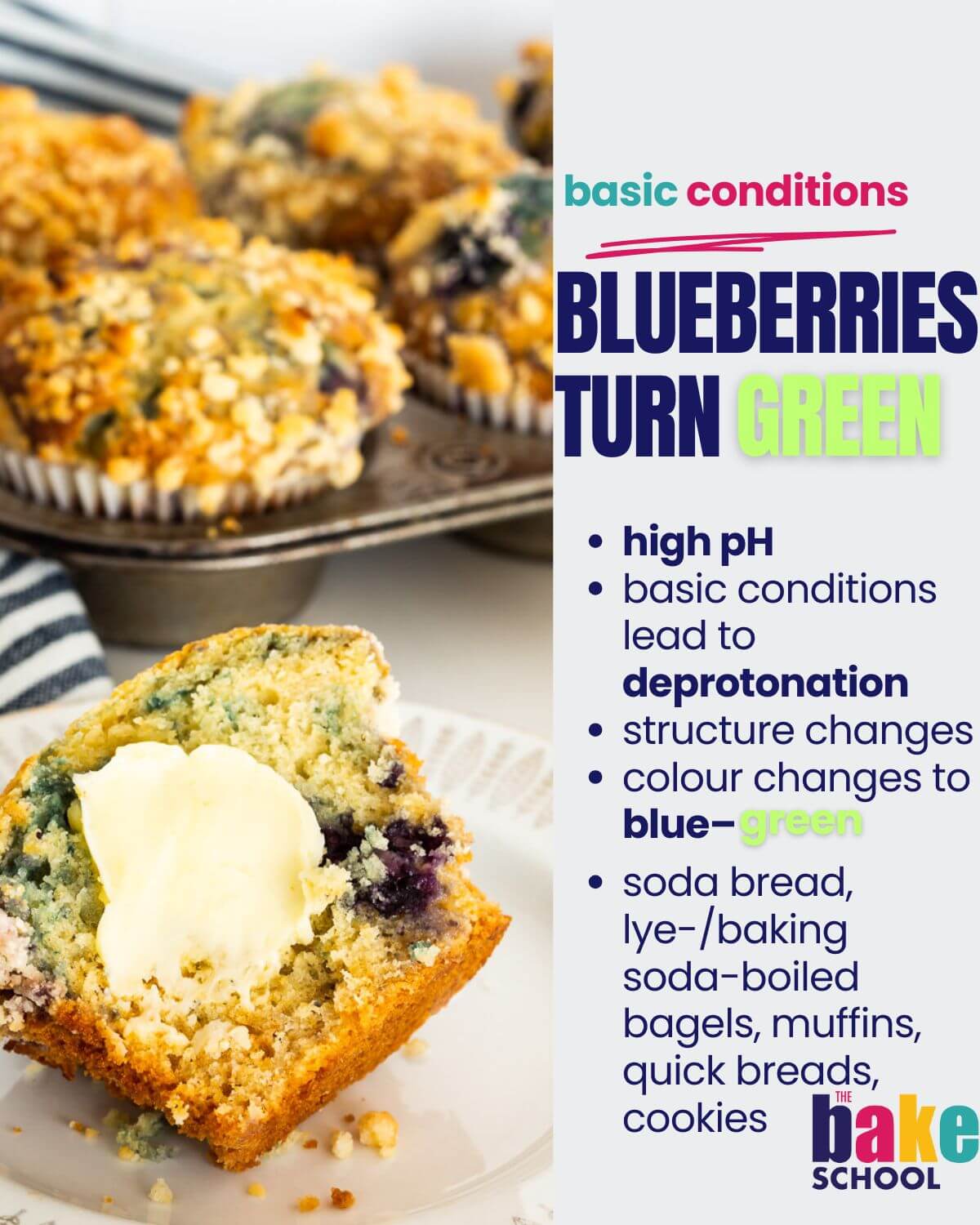
Does your recipe have a lot of baking soda, a chemical leavener that you might add to muffin batter in hopes of giving those muffins lots of oomph and rising power? When you bake with baking soda, your recipe will also include an acidic ingredient (or two) to react with. If there aren't enough acidic ingredients in your recipe to balance out the alkaline baking soda, your muffin batter will be basic (alkaline): your blueberry muffins will probably have splotches of green berries, instead of violet-blue, because the blueberries turn green under basic conditions.
Acidic Conditions-Blueberries Turn Red In Jam
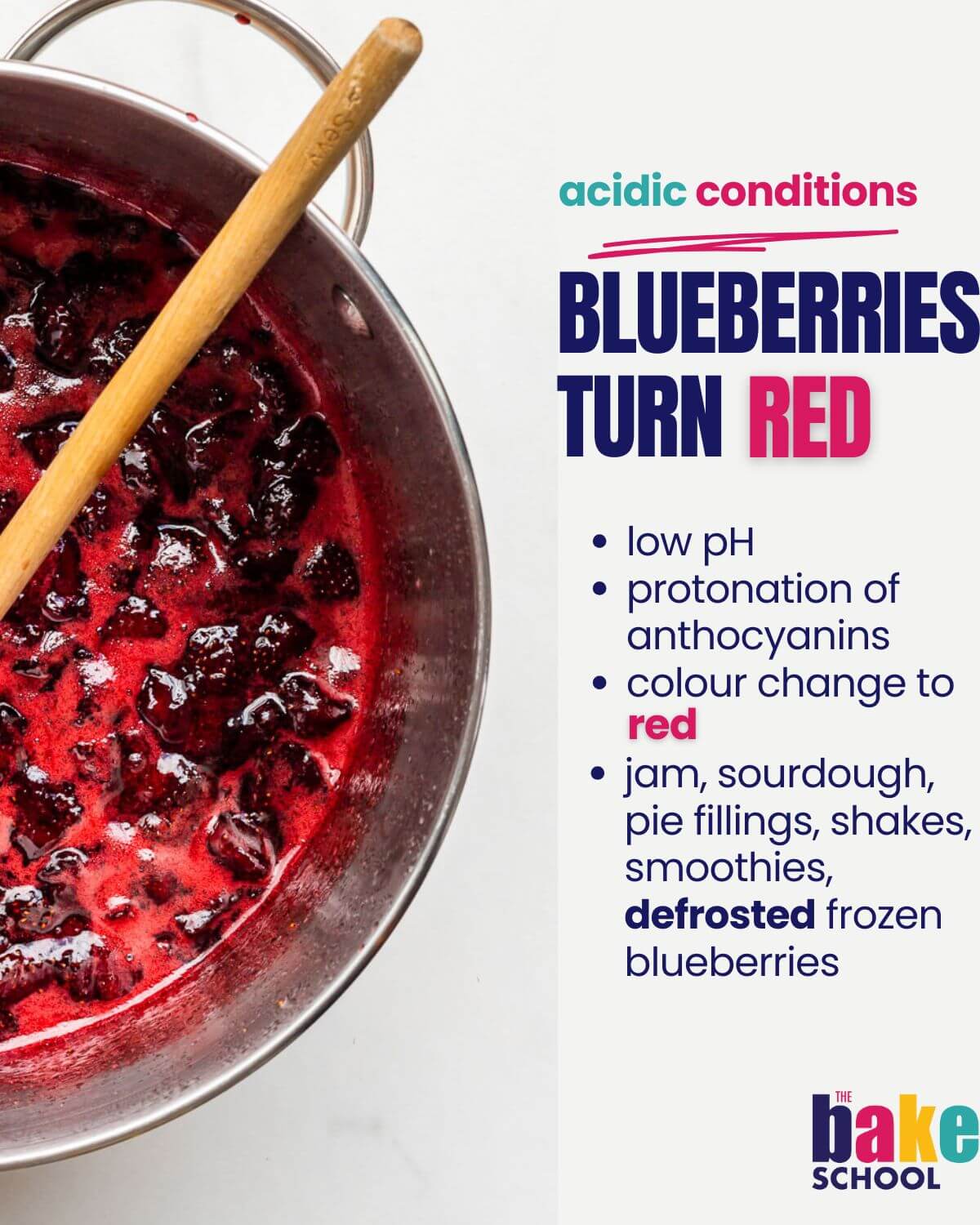
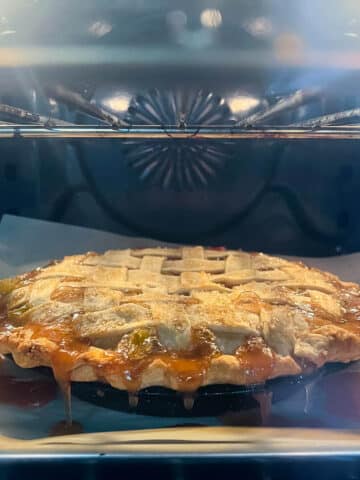
If you are making jams and pie fillings with fresh blueberries, you likely added lemon juice to the mixture. That lemon juice is acidic and lowers the pH of the mixture: the anthocyanins in the blueberries take on a magenta pink or even red colour because of the low pH.
When you defrost frozen blueberries, you might also notice the juices run purple or even pink. That's because blueberries are acidic, and when the anthocyanins in the skin mingle with the lower pH of the inside of the berry, they change colour.
Neutral Conditions-Blueberries Are Purple-Blue
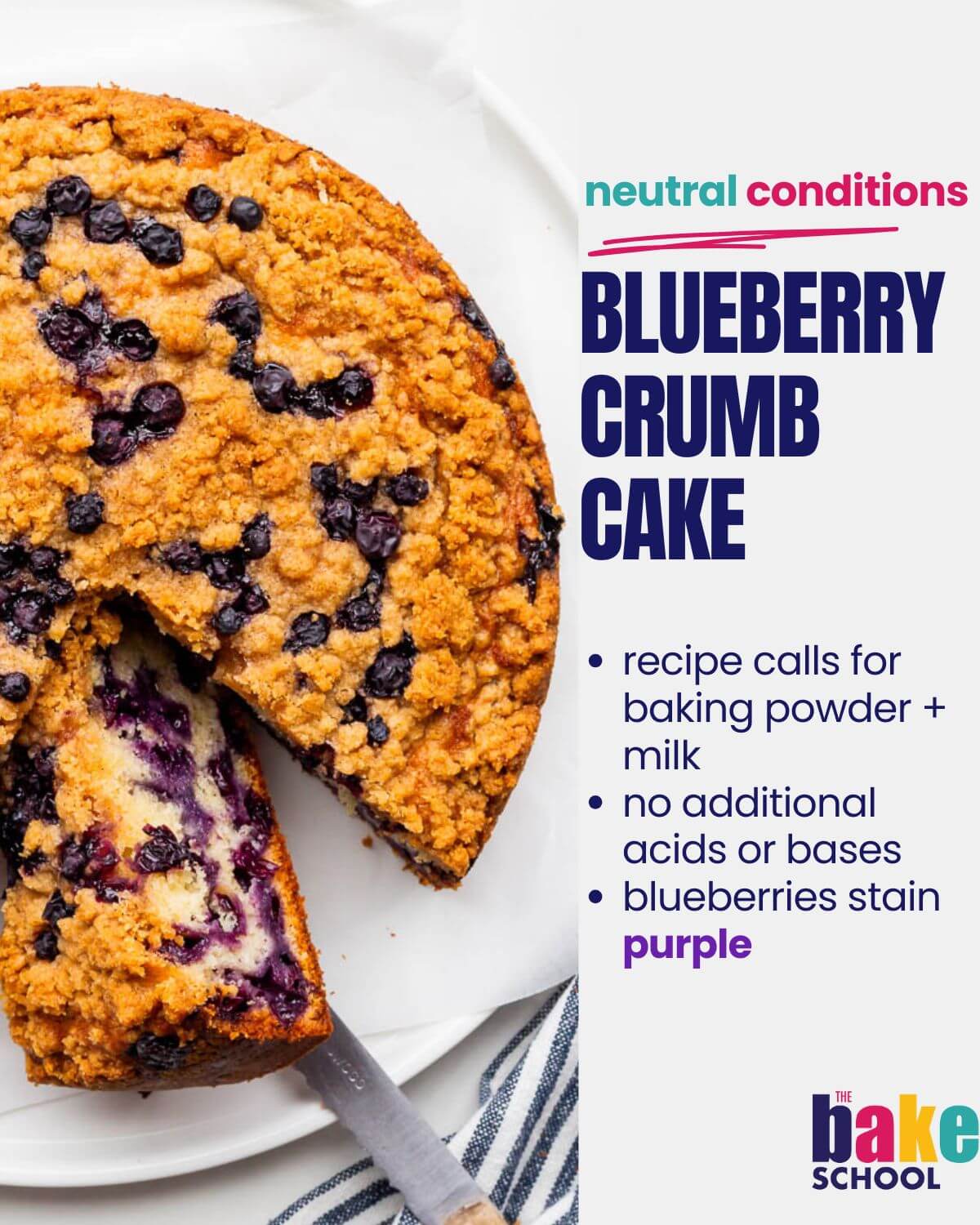
In this delicious blueberry crumb cake recipe, the cake batter is leavened with baking powder and features milk as the liquid, and the blueberries are a bright purple-blue colour. This is because in the absence of extreme pHs either acidic (low) or basic (high), the anthocyanins are that true blue-purple colour we expect from blueberries.
Some Blueberries Turn Green, Some Are Purple In Baked Goods
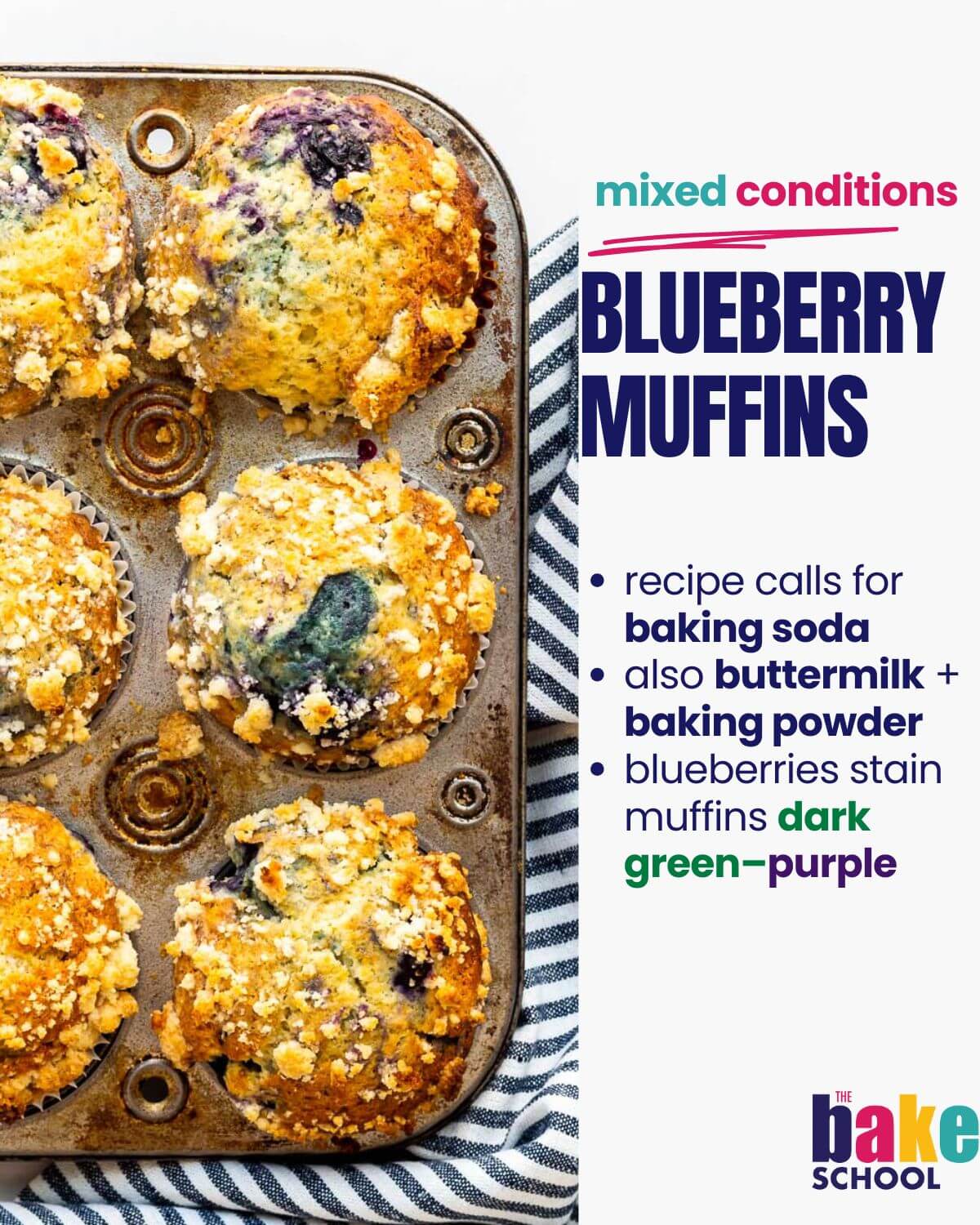
You might notice that in some batches, you end up with purple and green blueberries in different areas of the batch. The mixed colours of blueberries likely result from improper mixing of the batter and from patches of batter with a higher pH due to baking soda, which causes green blueberries in those areas.
Are Green Blueberries In Baked Goods Bad For You?
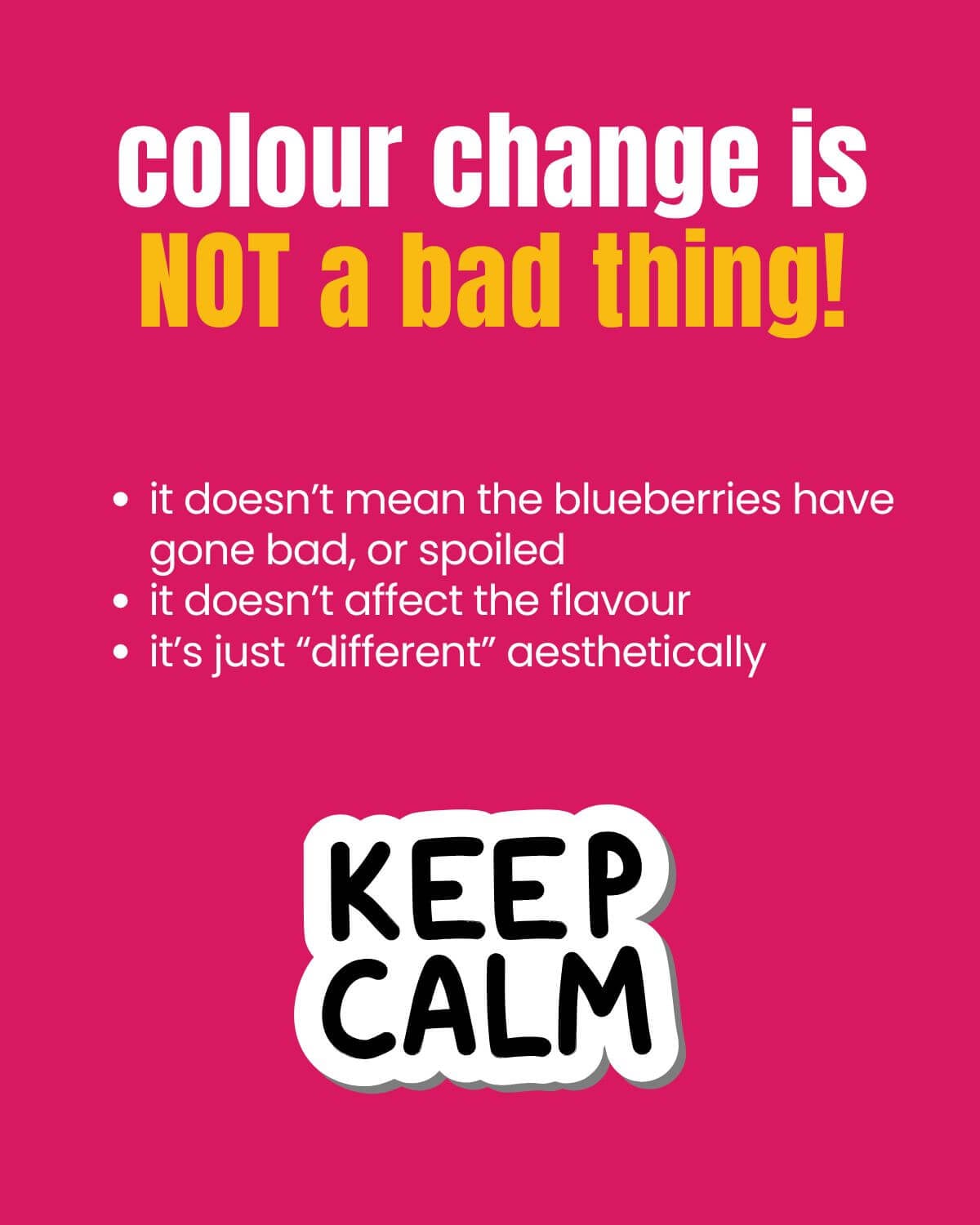
If your favourite blueberry muffin recipe yields the best muffins you've ever tasted, but the blueberries end up an unfortunate green, know that it's not the end of the world! The colour change doesn't affect the flavour. Your muffins are still safe to eat.
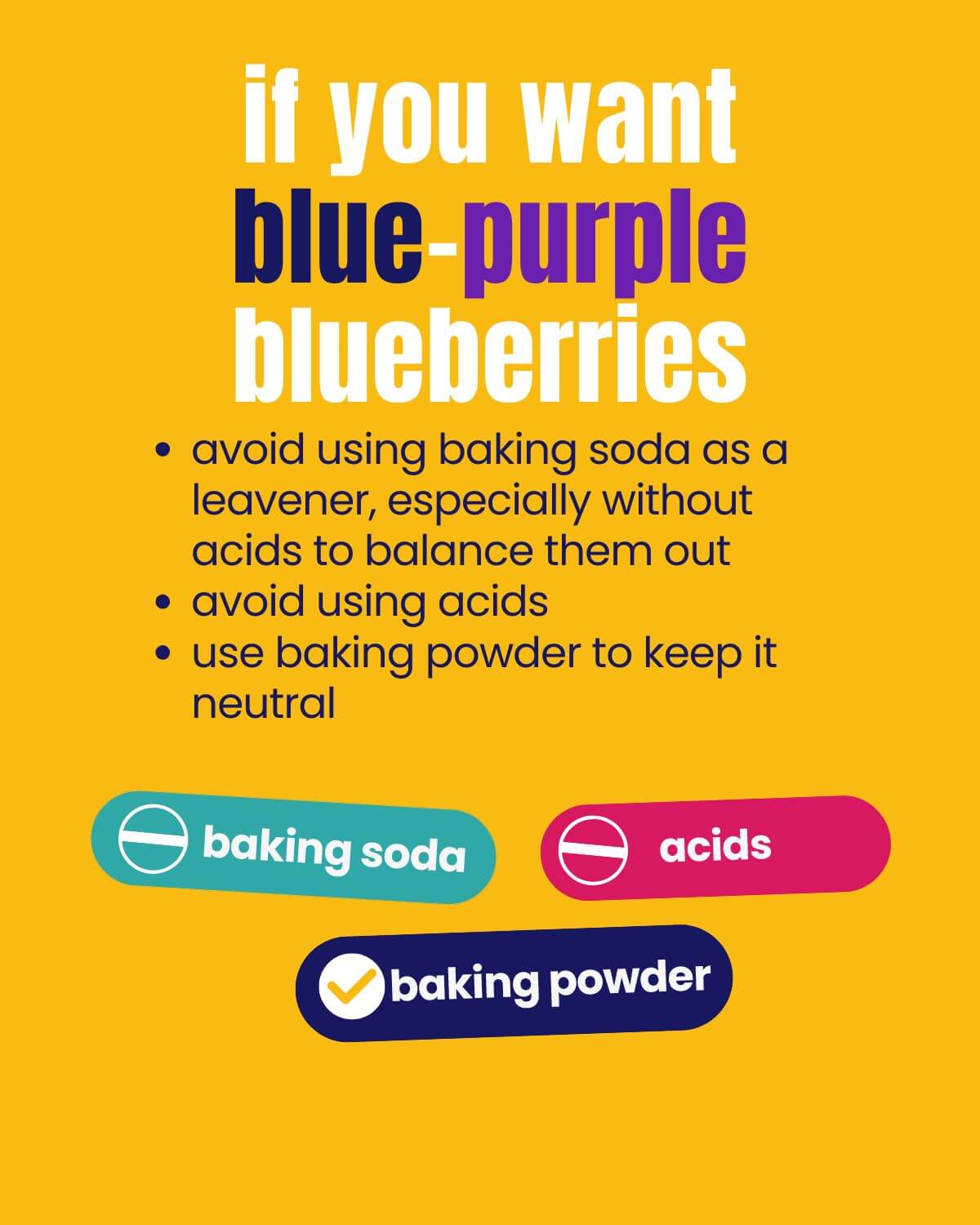
However, if that green colour bothers you, make a note in the recipe. In the next batch, consider adding in a little extra vinegar (or buttermilk, or whatever acid that is called for in the recipe) to balance out the extra baking soda, or you could even use a touch less baking soda in the next recipe, and add more baking powder instead.
Mark says
I make a blueberry cake. The recipe calls for 2 tsps of baking powder and not baking soda. The last few years since I have been making it, it turns green. It never use to happen before. I use the same amount of baking powder that I use to use. So, why is the blueberry cake turning green?
Janice says
Hi Mark,
That's really interesting. Have you tried buying a new package of baking powder or using a different brand? Because if the blueberries are suddenly turning green, it really is an indicator the pH of the cake batter is now higher (more basic) than it was before. Perhaps the baking powder formulation has changed, although I'd expect the product manufacturer to put more acid than baking soda in the formula to drive the reaction forward when the time comes...
x says
Lemon should help, I assume, vinegar for a cake might be too harsh. Not?
Chris says
This is lovely. I appreciate the detail and specifics, as I had recently started baking blueberry muffins and observed a rich red color, wondering what caused it. This post helped me understand what's going on, and beyond that, helped me understand how to adjust ingredients in the future when I start developing my own recipes. I have a scientific, analytical mindset, and love being able to use the knowledge I've gained from this post to use actual science in my cooking.
Thank you for this post and all its detail. More like this, please!
Annie says
Thanks for the information, I had the same thing happen to my white raspberry cake where there were small specs of blue. It certainly wasn't mold and I was afraid to serve it. Was this the same reasoning?
Heidi says
I made muffins some with blueberries and some with only chocolate chips and they all turned green! But not just near the blueberries, the whole muffin! I used almond meal, walnuts, and spices, yes there was baking soda in the batter-but I have made a similar recipe in the past with only chocolate chips and they were a normal color. Could the blueberry "essence" pass through the air and into the muffins without blueberries? Or could the muffin tin turn them green? It was so weird, I threw them out even though they tasted normal.
John Stois says
Does the same color change happen with pumpkin for those reasons? My pumpkin pie turned a shade of green .It was pumpkin color when i put it in the oven but turned a shade of green when I pulled it out. I almost threw it out but i tried a taste and it was delicious.
Dave says
So, does it kill you if you eat it? I mean.. I don't want to have cyanide in my cake.
Janice says
Hi Dave,
Cyanide is not at all the same as anthocyanins, and the anthocyanins found in blueberries certainly won't kill you (I think the human body just metabolizes and excretes them). No worries!
Vina says
Thank you for explaining the reason for the color change! My favorite cookie to bake is raspberry white chocolate and always turn green. The green with the red raspberries makes for a perfect Christmas cookie, but I've gotten used to people asking "why are they green?" and now I have an answer!
Stephanie says
ooooh so interesting! The muffin recipe I use doesn't turn green, but I've had some very good cake-like versions of the blueberry muffins where I pondered the greenish blobs (briefly.. before shoving the whole muffin in my mouth, because I'm a lady)
Mallory @ Because I Like Chocolate says
You have made this all sound so simple! I love these posts when you take your chemistry background and apply it to food and cooking. It's something different from what the rest of the food blogging world is doing and I find it quite refreshing!