


Most cream cheese frostings end up too soft and runny, unstable, or too sweet from an excess of powdered sugar added to thicken them enough for decorated layer cakes. Fear not: with a change in technique and an easy recipe, you can make thick cream cheese frosting to decorate cakes and with a lot less sugar!

Cream cheese frosting is notoriously unstable. The water in the cheese tends to separate out, creating a runny, loose frosting. Most people choose to add more powdered sugar to remedy the situation, but I've found a new way to mix the ingredients that yields a thick cream cheese frosting with half as much powdered sugar as the classic recipe. Another option is to make this thick cream cheese frosting without powdered sugar, sweetened with white chocolate instead of icing sugar.
Jump to:
- The Science Of Cream Cheese Frosting
- The Trick To Thick Cream Cheese Frosting
- Ingredients To Make Thick Cream Cheese Frosting
- Ratios For Stable Frosting
- Substitutions And Variations
- Technique To Make Stable Cream Cheese Frosting For Cake Decorating
- Cream Cheese Frosting FAQs
- Dessert Recipes With Cream Cheese Frosting
- 📖 Recipe
The Science Of Cream Cheese Frosting
Typical recipes for cream cheese frosting have you cream the butter and the cream cheese together, then add A TON of icing sugar. Cream cheese frosting recipes call for so much powdered sugar because, without it, the frosting tends to be runny, unstable, weepy, and soupy.
Why It's So Unstable
To understand why cream cheese frosting is unstable, you need to think about two things:
- Water content: A block of cream cheese contains a lot more water than the same weight of butter. Remember that most grocery store butters have roughly 80% fat, while cream cheese is half that, around 40% fat. What remains in both cases is mostly water, so cream cheese contains more moisture than butter.
- Hygroscopicity: Icing sugar is hygroscopic, meaning it pulls water from the environment. When cream cheese is creamed with butter, and then the icing sugar is added, the icing sugar draws out the moisture from the butter and the cheese. Butter has very little moisture to draw out, so you can make a thick, pipeable frosting with butter and icing sugar without much worry. But since cream cheese contributes double the moisture, when the icing sugar draws out that moisture, you end up with a soupy, runny, unstable cream cheese frosting.
You need to add a lot of powdered sugar to classic cream cheese frosting because without it, the frosting is too soft to work with. Otherwise, the frosting doesn't hold its shape when piped, and it's quite unstable. Bakers tend to overload the frosting with powdered sugar to stiffen the frosting. This is the main reason most cream cheese frosting recipes call for a large amount of icing sugar. This leads to a cloyingly sweet cream cheese frosting that doesn't taste very good.
The Trick To Thick Cream Cheese Frosting
Other recipes may rely on excess amounts of icing sugar, mascarpone, or even gelatin or cornstarch to stabilize cream cheese frosting. This version is purely a change in technique so you get the best cream cheese flavour without adding anything unusual.
If you want to avoid adding too much icing sugar to cream cheese frosting to make it lower in sugar while still creating a thicker texture for frosting a cake or decorating cupcakes, change the order in which you mix your ingredients! Here's what I mean:
- Step 1: Cream the butter with the icing sugar first, thereby coating all the little sugar molecules with fat
- Step 2: Once the butter and icing sugar are well mixed, add in the cream cheese. The sugar is coated with fat, making it more difficult to draw moisture out of the cream cheese. The cream cheese remains intact, and no water leaches out.
By following this mixing order, you can make a frosting with significantly less sugar. In fact, you end up with a frosting that tastes a lot like cheesecake, tangy and not overly sweet!
Ingredients To Make Thick Cream Cheese Frosting
You only need four ingredients to make thick cream cheese frosting:

- cream cheese: I prefer to make this frosting with blocks of full-fat Philadelphia brand cream cheese. Do not use low-fat cream cheese, which has more water and will make the frosting unstable
- butter: I bake with unsalted butter, but salted or demi-salted will work here
- icing sugar: use powdered (icing) sugar in this frosting to achieve a smooth, creamy texture. Granulated sugar will lead to a more gritty texture.
- flavourings: pure vanilla extract or almond extract work great in this recipe. You can also opt for vanilla bean paste, which will give the frosting a subtle speckled appearance.
Please see the recipe card for the exact ingredients and quantities.
Ratios For Stable Frosting
After many tests, I have concluded that the best ratio of butter:cream cheese:icing sugar for stable cream cheese frosting is 85-90 grams butter to 109 grams icing sugar to 250 grams cream cheese (1 block).
Substitutions And Variations
- Use blocks of cream cheese, not the kind in tubs: The type of cream cheese you buy affects this recipe. Cream cheese sold in the tub is formulated to be spreadable, and with that softer consistency, it may have a higher water content! Cream cheese sold in the tub has slightly less fat and more water than cream cheese sold in blocks, which is much firmer. Do not use any sort of low-fat cream cheese.
- Orange/lemon flavour: to add citrus flavour, use the zest, not the juice! Alternatively, you can add orange or lemon extract, or orange or lemon oil,
- Chocolate flavour: I have not tested a chocolate version of this recipe, but I would likely use Dutch-processed cocoa powder to maintain the creamy texture. Melted chocolate hardens as it cools, and may cause the frosting to thicken excessively, altering the texture.
- Colour: You can colour it with gel food colouring for decorating, and reader Michelle suggested trying a powder food colouring, which is brilliant.
- Brown butter: Try browning the butter, then cooling it to room temperature before using it to give the frosting a nutty flavour.
- Cinnamon: If you'd like to flavour this cream cheese frosting with cinnamon, start with 1 teaspoon of ground cinnamon, then taste and adjust as needed. I suspect you might even need 2 teaspoons of cinnamon.
Any substitutions and variations you make need to be tested. Do a trial run on a small batch to work out the kinks before making frosting for a cake, or you may run into problems.
Technique To Make Stable Cream Cheese Frosting For Cake Decorating
I prefer to make it in a stand mixer with a paddle, but you could also use a handheld electric mixer:
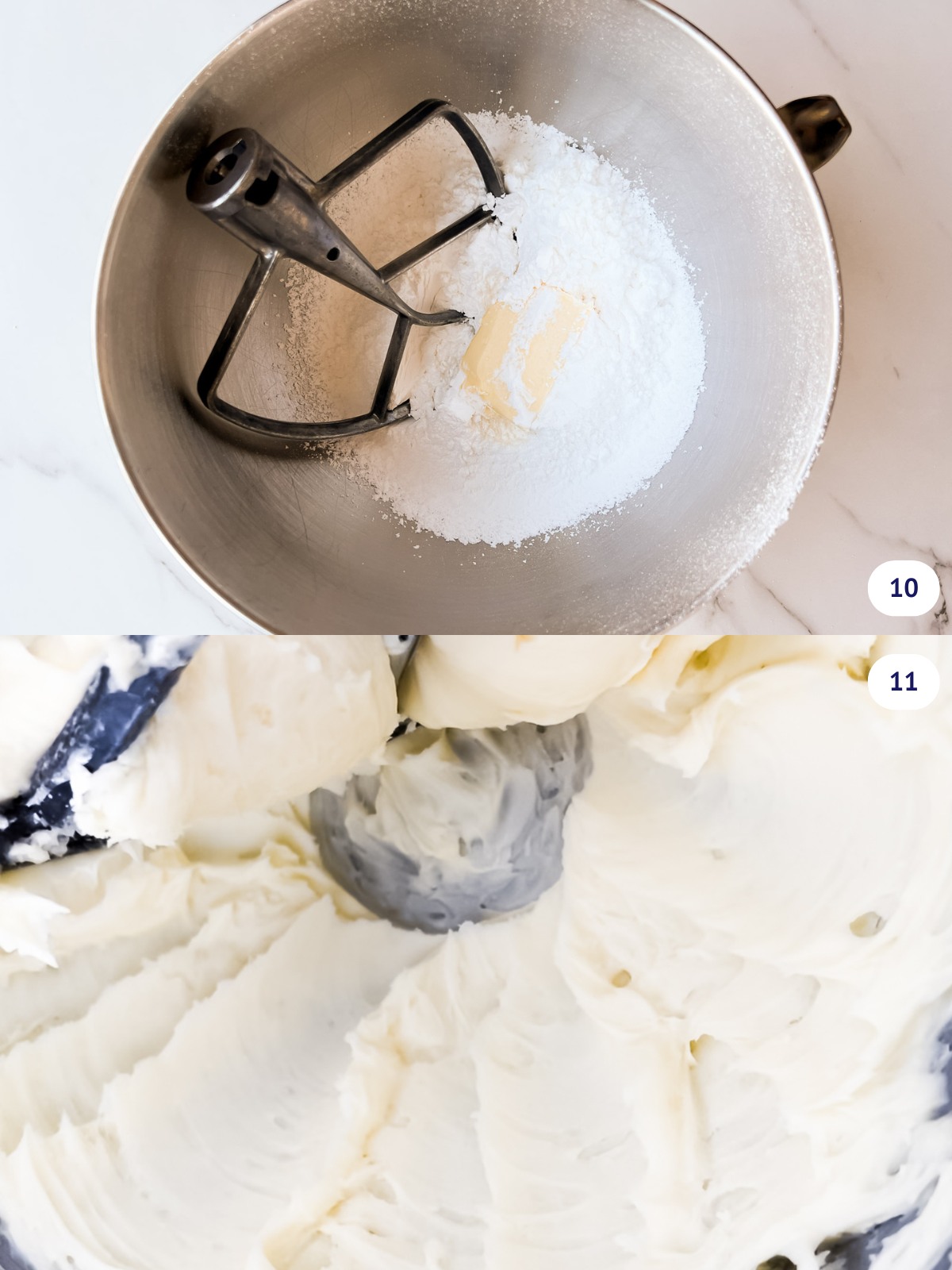
Step 1: Combine the icing sugar and butter in the bowl of a stand mixer fitted with the paddle attachment (image 10). Cream the two ingredients together really well until the mixture is smooth with no lumps (image 11).
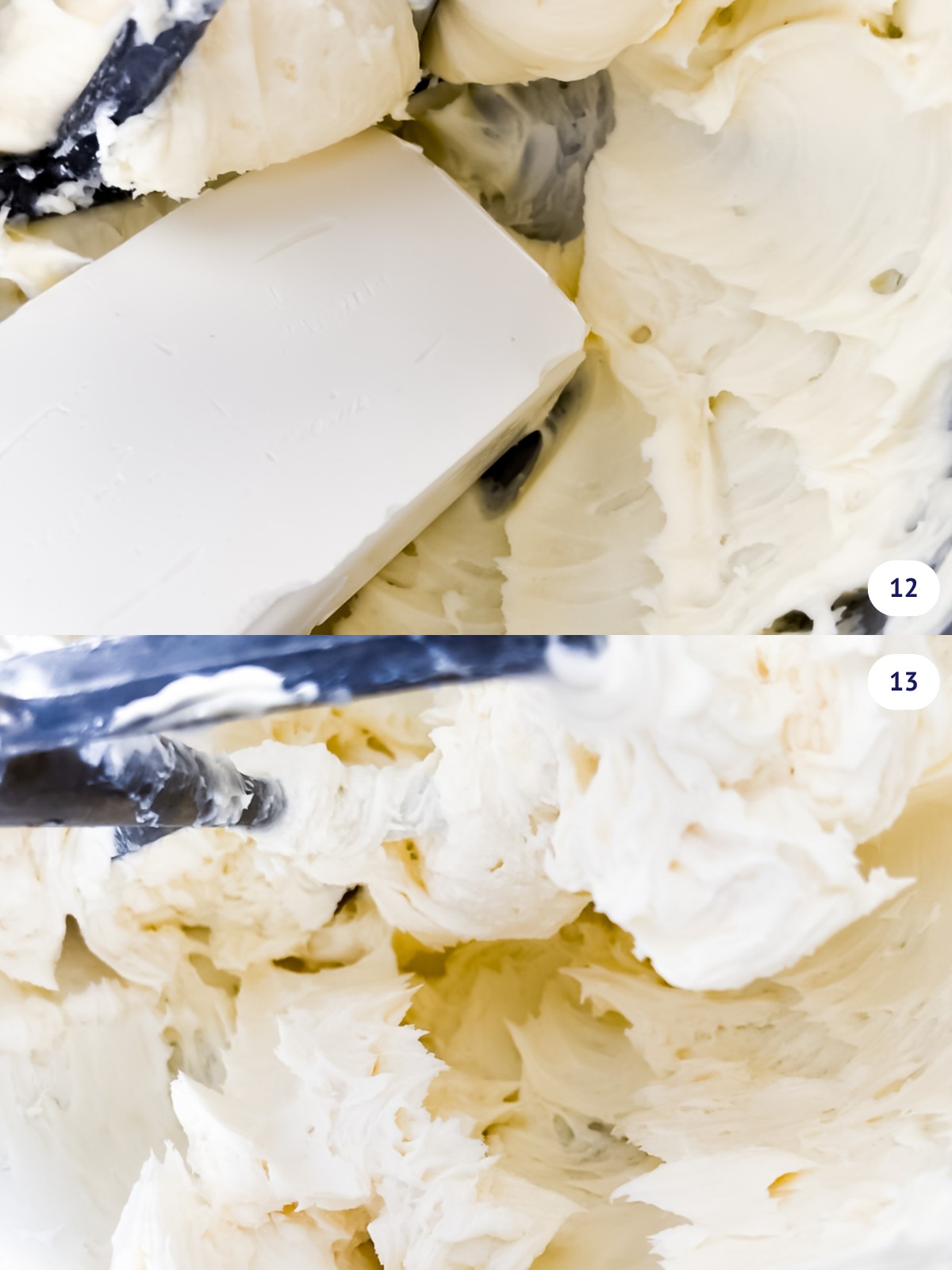
Step 2: Add the cream cheese to the mixer bowl (image 12) and beat it in until smooth, creamy and fluffy (image 13).
Cream Cheese Frosting FAQs
The brand and type of cream cheese make a HUGE difference in frosting recipes. You should use Philadelphia full-fat cream cheese, sold in 250-gram blocks (the block weight varies by country).
Any other brand may result in a different taste and mouthfeel, as some have more gums or different stabilizers, which can affect taste and texture.
Also, in some countries, cream cheese is sold exclusively in tubs. Cream cheese sold in tubs may contain more water. I recommend straining the cream cheese by placing it in a strainer lined with a few layers of paper towel or cheesecloth to remove the excess water before proceeding with the recipe.
Change the order you mix your ingredients in, and your frosting will be thicker and you won't need as much sugar! Mix the butter with part of the icing sugar first, then add the cream cheese and the rest of the sugar (or as much to achieve the right flavour). You'll see that you won't need so much if you mix the ingredients in this order!
I do not suggest substituting any other type of sugar in this frosting recipe. The smooth texture of cream cheese frosting has as much to do with the butter and cream cheese as it does the icing sugar. You can't replace it here with anything else. This is not a baking substitution that I would recommend. If you would like a cream cheese frosting without icing sugar, try this white chocolate cream cheese frosting!
Cream cheese frosting is very versatile and tastes great with most types of cake. I love to frost chocolate cake with cream cheese frosting, and of course it goes well with carrot or spice cake. It's great on cupcakes too, as you can see in the photo!
Yes, you should definitely store frosted cakes in the fridge. If you aren't a fan of cold cake, slice it cold and let the slice come to room temperature for about 30 minutes before enjoying.
Yes, you can, but don't leave it out for too long. I wouldn't suggest storing it on the counter for more than a day. Cream cheese frosting contains butter and cream cheese. Both of these ingredients spoil at room temperature, so refrigerate as much as possible for long-term storage. Take the frosting out to bring it up to room temperature before using. Take the frosted cake out of the fridge 30 minutes to an hour before serving.
Dessert Recipes With Cream Cheese Frosting
Once you have mastered this thick cream cheese frosting recipe, you will see that it is so thick you can use it to make layer cakes and decorate them. I've used this recipe for:
- eggless carrot cake
- berry chocolate cake
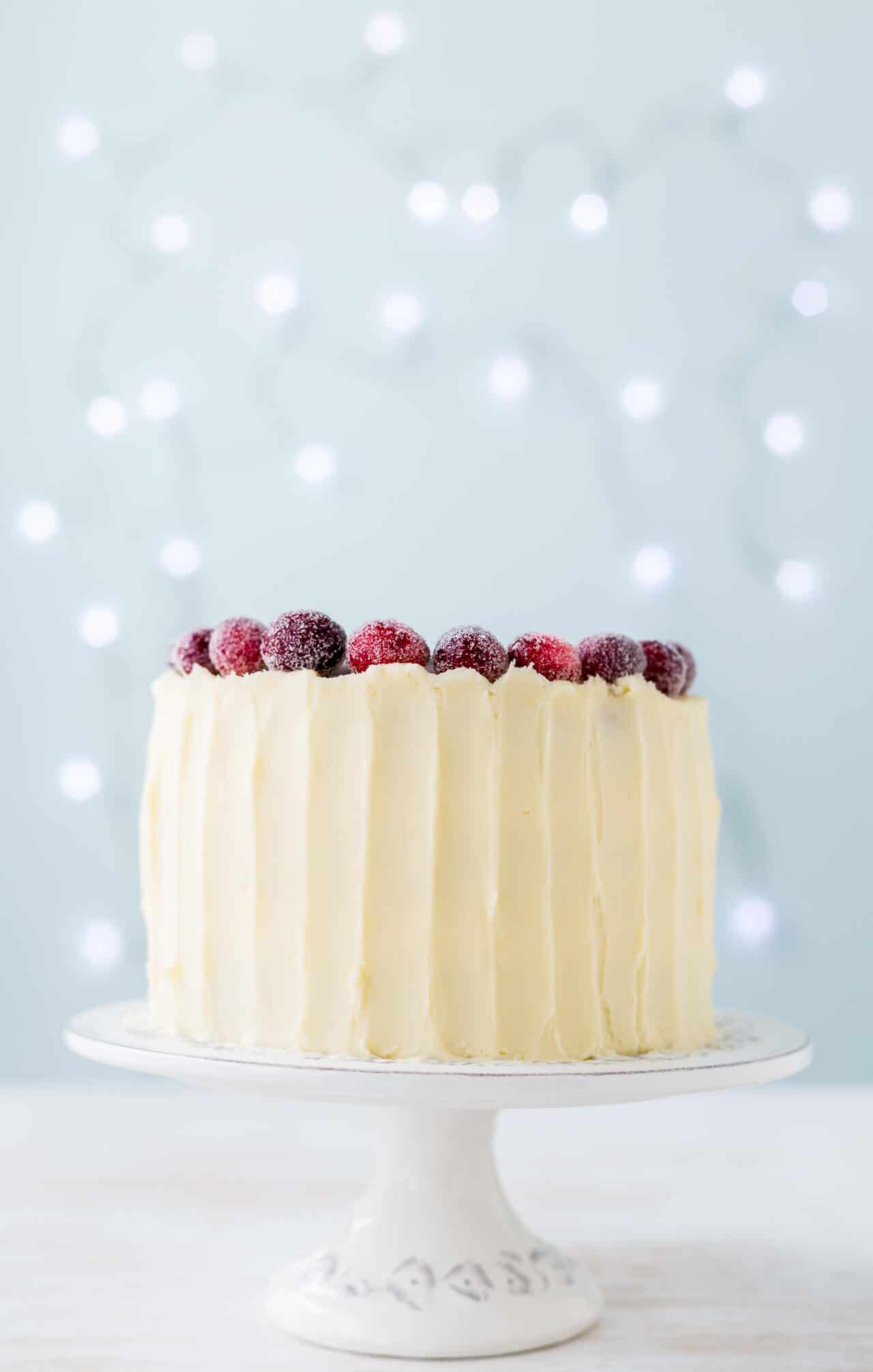
- cranberry layer cake (I also do this white chocolate cream cheese frosting without powdered sugar)
- spiced apple cupcakes
- pumpkin whoopie pies
- chocolate cake with cream cheese frosting
You know this recipe is good because this cream cheese frosting works great in layer cakes without the risk of sliding layers and weeping frosting! There are so many ways to get creative with this frosting. You can also use this frosting to fill whoopie pies.
If you tried this recipe for thick cream cheese frosting (or any other recipe on my website), please leave a ⭐ star rating and let me know how it went in the comments below. I love hearing from you!
📖 Recipe

Thick Cream Cheese Frosting for Layer Cakes and Piping
Ingredients
- 173 grams unsalted butter room temperature
- 218 grams icing sugar sifted after measuring
- 500 grams Philadelphia cream cheese (full fat, regular) cold
- 5 mL pure vanilla extract or vanilla bean paste (both are optional)
Instructions
- Cream together the butter and the icing sugar first until they are fluffy and creamy.
- When these two ingredients are smooth and creamy, add the cream cheese all at once. Beat for several minutes until you have a thick, smooth frosting.
Notes
- Please use Philadelphia brand cream cheese because it's the best! The taste and texture of the frosting won't be as good with other brands.
- Where I live, a full-size block of cream cheese is equivalent to 250 grams (0.55 pounds).
- Do not use spreadable cream cheese in a tub or low-fat.
- This is enough to frost a three-layer 6-inch cake. For an 8-inch cake, readers have made scaled up to a 1.5x batch (make 1.5 times the recipe) - to be safe, just double it because it's better to have too much than too little.
- You can freeze leftover frosting. Defrost it in the fridge overnight before rewhipping and using.
- For lemon or orange flavour, add the zest of citrus fruit. You can also try adding an extract or lemon or orange oil.
- For cinnamon, start by adding 1 teaspoon (5 mL) of ground cinnamon. Taste and adjust accordingly.
- For chocolate frosting, use Dutch-processed cocoa powder. I have not tested this yet, but cocoa powder would work better than melted chocolate, which hardens as it cools.
- Calories calculated based on one tablespoon.
Explore More With AI
Nutrition
Nutrition information is automatically calculated and should only be used as an approximation.
Kate says
I unfortunately read this after making my frosting…I had some consistency issues but have taken your advice and refrigerated it.If is not sufficient to thicken it i will try using instant vanilla pudding as a thickening agent.
Shara says
Help! My frosting is curdled! How do I fix it??
Janice says
Hi Shara, I'm sorry this happened. Assuming you followed the quantities and method exactly, it's likely it's a temperature issue. For example, if you were baking cakes before making the frosting, your kitchen might be too warm and that probably caused the frosting to separate and "sweat." I've had it happen especially when the cream cheese got too warm before I made the frosting. I took it out too far in advance, it warmed up, then the frosting I made with it broke down.
There are different ways to tackle this, depending on what caused the curdling. Sometimes you can refrigerate the frosting for an hour or more to cool it down significantly, then re-whip it. This is probably what I would try first.
Another option is to heat a portion of it and then whip everything together, but I haven't tried that technique on this recipe... it's more commonly done with meringue-based frostings (like Italian meringue buttercream or swiss meringue buttercream).
Another thing that may cause a curdled look is if the cream cheese isn't fully incorporated into the mixture and you may see flecks of it. But I wouldn't describe that as curdled, so I'm assuming it's more likely a temperature issue as mentioned above.
I hope this helps. Let me know how it goes and good luck!
Shara says
Thank you for the quick response! I will try chilling it. I don't want to throw 2 packages off cream cheese and almost half a block of butter away!!
Janice says
I don't think that will happen! There are always tricks to fix these things! It's a matter of finding the right method to fit your situation!
Shara says
I just simply could not get it to work for me and I needed the icing right away so I quick whipped up a different recipe. I'm not quite ready to throw on the towel on this one yet though so I'm gonna give it another try sometime.
Rachelle says
Thank you so much for this tip! The first time I ever tried to make a cream cheese frosting it was runny, and then I recently got a request for carrot cake with cream cheese frosting and was so nervous to try making it again, but I found this post and it was a lifesaver!!! Never using another recipe again. I made it exactly as written and weighed instead of using cup measurements, whipped the heck out of the butter and added the sugar a bit at a time and used cold cream cheese. It was so thick I had to thin it down, so impressed! and it tasted so good, exactly like cheesecake! I rarely comment on recipes but I had to thank you! I'm shocked that a lot of major recipe blogs don't seem to know about this method
Danielle says
Hi,
I’m making a two tiered wedding cake. Will this icing hold up ok being transferred to the event space?
Janice says
Hi,
This frosting is quite stable when properly mixed, but I'd definitely chill the frosted cakes thoroughly before moving them, which I'm assuming you would do, especially before stacking them at your wedding venue.
I hope that helps! Good luck! let me know how it turns out!
MCH says
Thank you for this recipe!
I was hoping for thicker frosting, but I also got less sugar. Yay! I used your recipe on a 4-layer carrot cake and was just able to get more than a crumb coat on top (and in between the layers). I might make an extra quarter or half batch of frosting if I get better at decorating. This recipe used less than half the sugar as my other recipe. The frosting tasted great, wasn't oversweet (which was the problem with my old recipe--and if I needed to thicken, I was supposed to add more sugar and if it was too sweet then add more salt). Can't say enough good things about it.
I will keep this tip in mind (binding the fat with sugar) when I encounter problems with other recipes. Thank you for sharing.
Kay M. says
Wow! This technique really helped thicken my sloppy cream cheese frosting!! I love that it doesn't need a lot of powdered sugar but it still retains the thick consistency. Will keep using this recipe from now on!!
Rose says
Definitely thicker, less sweet but maybe not sweet enough. Added a little more powdered sugar and texture was still good.
Unfortunately when I added vanilla extract it gave the Frosting a brownish color that was not pleasant to look at. Perhaps use colorless vanilla or none at all.
Janice says
Hi Rose,
Using clear vanilla extract is a great suggestion! I don't mind the creamy beige tint regular vanilla extract gives this frosting, but by all means, use clear if you want to keep the frosting whiter. Some pastry professionals will add the tiniest smidge of a blue or purple gel colour to counteract the yellow tint of buttercream frostings. Really just the tip of a toothpick is all you need. That might also be an option if you are looking for a bright "white" frosting.
Susan says
Can I use salted butter instead of unsalted butter? In my country unsalted butter is very difficult to find.
Janice says
Hi Susan,
I'm not sure where you live, but in Canada, generally, there's about 70–75 mg of sodium per 10 grams of salted butter, whereas some American brands have 90 to 100 grams of sodium per 10 grams. The amount of salt varies, so it's hard for me to say how salty your salted butter will make this frosting.
But if you can't find unsalted butter, I would give the recipe a try with salted butter or if you can get half-salted butter, that would be even better! Try making a smaller batch, taste and see how it goes. This frosting is not overly sweet, so with the extra salt from your butter, the frosting will still be tasty, but there's also salt in the cream cheese so the salt will be more pronounced.
I'm sorry I can't give you a more specific answer, but I hope this was still somewhat helpful! Let me know how it tastes if you try the recipe with salted butter!
Jaime says
How can I make this into strawberry cream cheese frosting? Thank you!!
Janice says
Hi Jaime,
Great question! To flavour the frosting, your best bet might be to grind freeze-dried strawberries and incorporate the powder into the frosting.
Another option would be to boil down strawberries into a very concentrated syrup, as I did for this raspberry frosting. You really want to boil off as much water as possible if you choose this route to avoid destabilizing the recipe.
Let me know if either of these methods works for you!
Linda says
If this helps anybody just fiy, this recipe yields 37 frosted cupcakes 🥰
Maggie says
If cream cheese is cold will it be difficult to cream.
Janice says
Hi Maggie, it actually works better with cold cream cheese. If the cream cheese gets too warm, the frosting may separate and become greasy... The only issue I've had with the cream cheese when it's cold is that sometimes, you may detect a couple of flecks of cream cheese that haven't mixed in properly, but usually when I'm frosting my cakes, I can see them and pull them off with the tip of a knife. Really, for the most part, it does mix in well! Try it and let me know how it goes!
Kimberly says
I’ve used this recipe for years, it’s delicious 😋. This is the same as my mom’s. I remember her telling me don’t stray from the order of ingredients! I have tried other recipes and end up with a metallic taste because of the powdered sugar and cornstarch it contains…. Because you have to use so much powdered sugar for the consistency.