


Did your cake collapse in the oven or sink as it cooled? Find out why cakes sink and how to keep a cake from falling after baking.
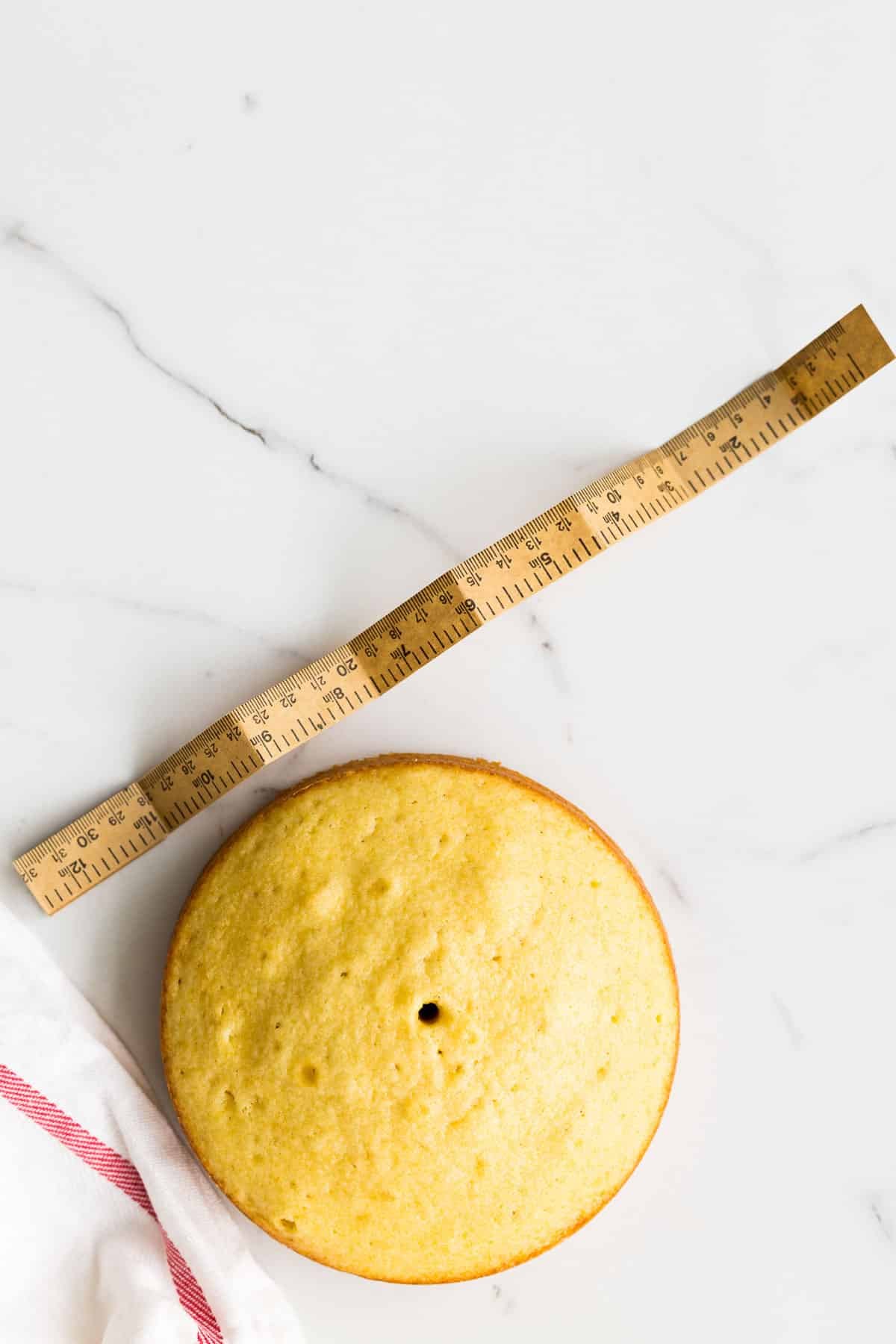
There's nothing worse than pulling a cake from the oven and having it collapse seconds later as it cools. Or if your cake collapses while it's baking! Once a cake sinks, there's nothing you can do. Yes, it's generally still edible, but how can we stop it from happening? What ingredients or techniques can we change to avoid cakes sinking?
Reasons Cakes Sink
This table summarizes the main reasons cakes sink. For more information about each, please read the next sections after the table.
| Reason | Fix |
|---|---|
| Oven isn't hot enough | Next time, bake your cake at a higher temperature so your leavening reacts and moisture evaporates, promoting rise |
| Cake is underbaked | Next time, bake your cake for longer and use a few techniques for checking your cake is done baking |
| Lack of structure | Increase dry ingredients or eggs, or decrease wet ingredients or butter |
| Too much leavening | Decrease leavening agents or change leavening agents so the cake doesn't rise too much or too quickly |
| Not enough leavening | Increase leavening agents or use a combination of baking soda plus baking powder to ensure your cake has enough oomph to rise tall and stay risen |
The Cake Collapses Because Your Oven Isn't Hot Enough Or Your Cake Is Under-Baked
Your cakes may collapse if your oven temperature is too low. I always keep an oven thermometer in my oven to make sure it's properly preheated before I put cakes in to bake.
The oven thermometer never leaves my oven. I move it from one rack to another, as needed, but I rely on the thermometer to tell me the oven temperature. I like to use a ChefAlarm digital thermometer with an air probe attachment.
Oven heat is vital for activating baking powder so your cakes rise, and for setting the cake structure. If there's not enough heat to set the crust and the crumb inside, the cake may rise and fall.

Also, if you don't bake your cake long enough, it will sink. For butter cakes, like this vanilla butter cake, I look for certain signs before I remove them from the oven. Here are a few ways to check if your cake is done baking:
- The skewer test: I poke the centre of the cake with a cake tester (like this one from Amazon) to see if it's still wet inside. If the tester comes out clean, the cake should be done (although some cakes are sneaky and may pass the skewer test but still require more oven time... that's a whole other story).
- The edges: I look at the edges of the cake, which should be nicely golden brown all around, especially near the pan. The edges of the cake should have pulled away from the sides of the pan, a telltale sign the cake is baked through.
- The tap test: I give the top of the cake a light, gentle tap/poke with my hand. It should feel a little bouncy and possibly even spring back. If you press the cake and it makes a dent and feels very "delicate" in an unset or wet-cake kind of way. The cake isn't done. It's hard to explain, but when you press a cake that's not totally baked through, and then you press it again when it's properly baked, you will feel that when the cake is cooked, it takes on a certain firmness and strength, though very delicate.
- The temperature: use an instant-read thermometer like the Thermapen or the Thermoworks ThermoPop to measure the internal cake temperature. When it's done baking, it should read 100 ºC or 212 ºF.
The Cake Sinks Because It Lacks Structure
If you don't include enough structure-building ingredients in your recipe, the cake may collapse. As it bakes, carbon dioxide and steam push the cake batter upward in the pan. It needs support to maintain that volume and set the height. If not, the cake will collapse on itself. This can even happen in the oven. There are a couple of reasons a cake can lack enough support.
- Not enough gluten: I've noticed this especially when playing around with gluten-free cake recipes. Gluten plays an important structural role, even in cakes. And so, when I develop gluten-free cake recipes, if I don't add a structure-providing ingredient, like extra egg, some xanthan gum or even ground chia/flax to compensate for the lack of gluten, the cake collapses on itself. This can even happen in the oven, before it's done baking (particularly tragic!). The cake can't support all that air and height, so it falls, leaving a sunken, sometimes greasy cake that isn't very tasty or appetizing. I wrote about the process of developing a gluten-free cake made from mashed potatoes.
- Not enough eggs, particularly the egg whites: Eggs provide structure and support as a cake bakes. Egg proteins coagulate and help set the cake, allowing it to hold the height achieved in the oven. Not enough egg means not enough coagulation, and therefore not enough structure.
Too Much Of An Ingredient Can Cause A Cake To Collapse
This also relates to a lack of structure, but if your recipe's ingredient ratio is off and there's too much of a certain ingredient, it can be disastrous because the recipe has too much of that something and not enough structure to hold it together. The main culprits in this case are:
- Too much fat: fat adds extra tenderness to a cake, sure, but too much tenderness comes with a lack of structure and can cause collapse. Fat interferes with the gluten network. You have to find the right balance between fat-driven tenderness and structure.
- Too much sugar: again, if that sugar isn't balanced with more eggs or more flour in your recipe, you'll get a collapsed cake and a crumbly cake from a lack of structure.
- Too much leavener (baking powder or baking soda): think about it, the more leavener you have, the more gas will form inside the cake, and if there isn't a growing structure to support all that extra gas, the gas will escape. The cake will rise up and then collapse back down. Remember when I did the experiment to show the impact of too much baking soda? The cakes made with less baking soda rose far more. In retrospect, that was probably because the cakes with more leavener rose and collapsed, and also because the pH affects the structural proteins, preventing them from assembling.
- Too much liquid: again, extra liquid needs extra structure, or you can run into structural issues.
Essentially, too much of certain ingredients (fat, sugar, leavening agent, liquid) can cause cake collapse, while not enough of other ingredients (eggs and flour) can also lead to collapse. Measure ingredients properly and to use reliable, tested recipes.
How To Avoid Cake Collapse And Cake Sinking As They Cool?
Knowing how to test when a cake is done baking is essential to successful baking and to avoid cake collapse. It seems obvious, but if you are baking a recipe you are familiar with and have successfully tested before, your cake may have sunk because it wasn't baked long enough, you skipped a step or ingredient, or you added too much of something. It happens.
If you are baking a new recipe you aren't familiar with, there may be a typo the author didn't catch, and an ingredient may be missing (or perhaps too much of an ingredient was listed by accident). This also happens a lot.
For Angel Food Cakes, Cool The Cake Upside Down
A trick to prevent sponge cakes like Angel Food cakes from sinking: cool them upside down! Cooling the cake upside down gives it plenty of room to stretch out of the pan instead of collapsing into the bottom.
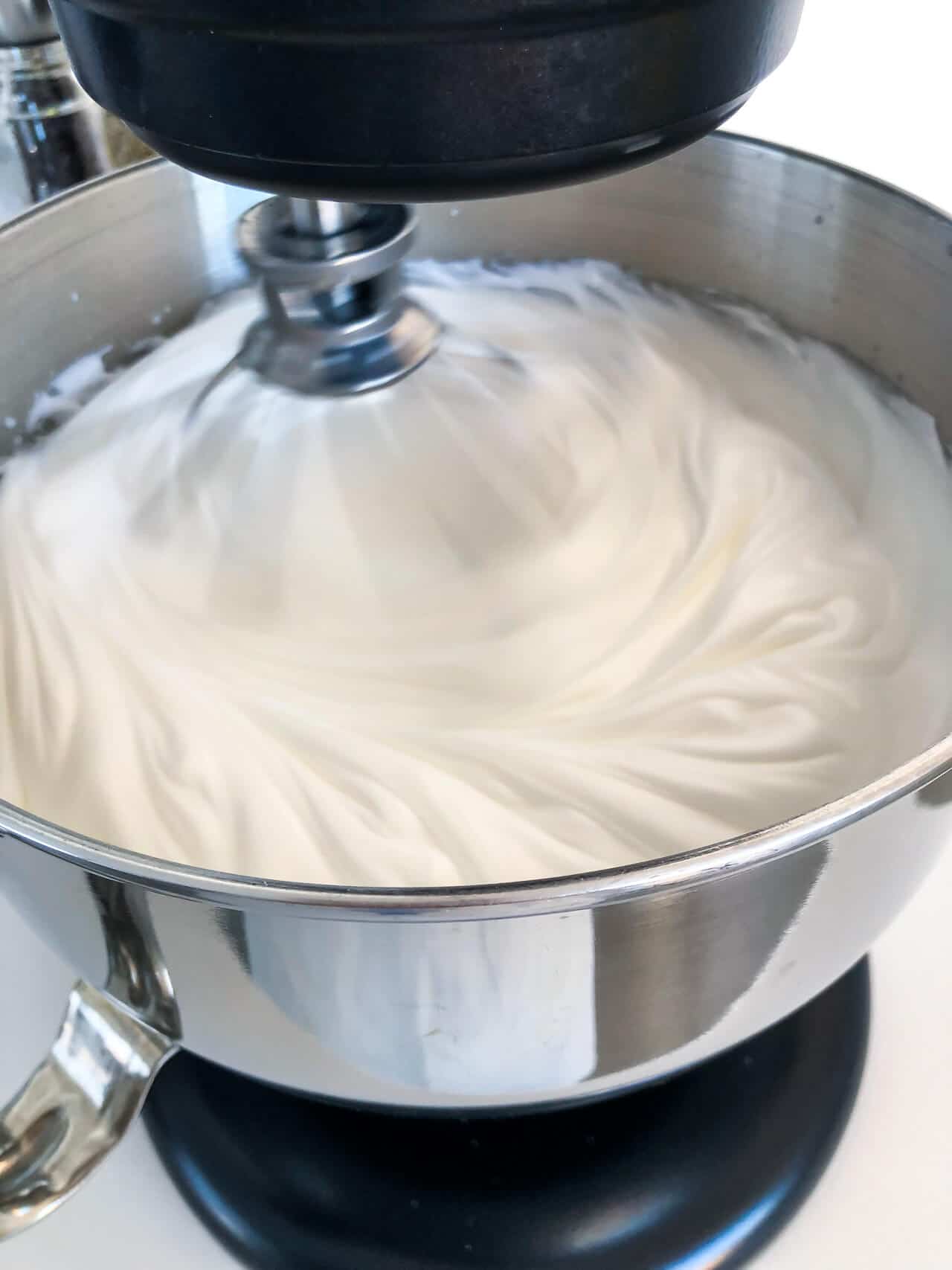
Cooling certain sponge cakes upside down creates a taller cake with a lighter texture. But this only works for sponge cakes baked in ungreased pans/unfloured pans because these cakes stick to the sides of the pan. A regular vanilla cake would fall right out of the pan if cooled upside down because of the nature of the cake and how the pan is prepared before baking.

A Science Theory About Cake Collapse
You might recall that, in my post about the best baking and baking science books, I mentioned reading in "The Science of Cooking" (available on Amazon) that Peter Barham claims you have to drop a cake on the counter to prevent it from collapsing as it cools. He writes that cakes collapse as they cool because steam condenses in the cake bubbles.
The cake bubbles shrink because air can't get into those cake bubbles to replace the volume lost. Shrinking bubbles means shrinking cake, basically, and the shrinking occurs most towards the middle of the cake because the centre of the cake is softer, while the crust is too dry and stiff to contract.
Barham goes on to offer a way of preventing cake collapse, specifically stating that "Dropping the cake, from a height of about 30 cm onto a hard surface, passes a shock through the bubble walls and allows some of them to break, converting the cake from a closed to an open cell structure. Now air is able to get into the broken bubbles, and the cake will not collapse."
Obviously, I had to test this to see for myself.
Cake Collapse Experiment
I made my go-to vanilla cake recipe (which I've modified to make this white chocolate cranberry cake and this Earl Grey cake). The recipe makes three equal layers of cake, perfect for testing: I have a control sample (a cake that goes straight from the oven to the cooling rack without any jostling or dropping), plus two cakes that I dropped immediately after removing them from the oven. Fun times!
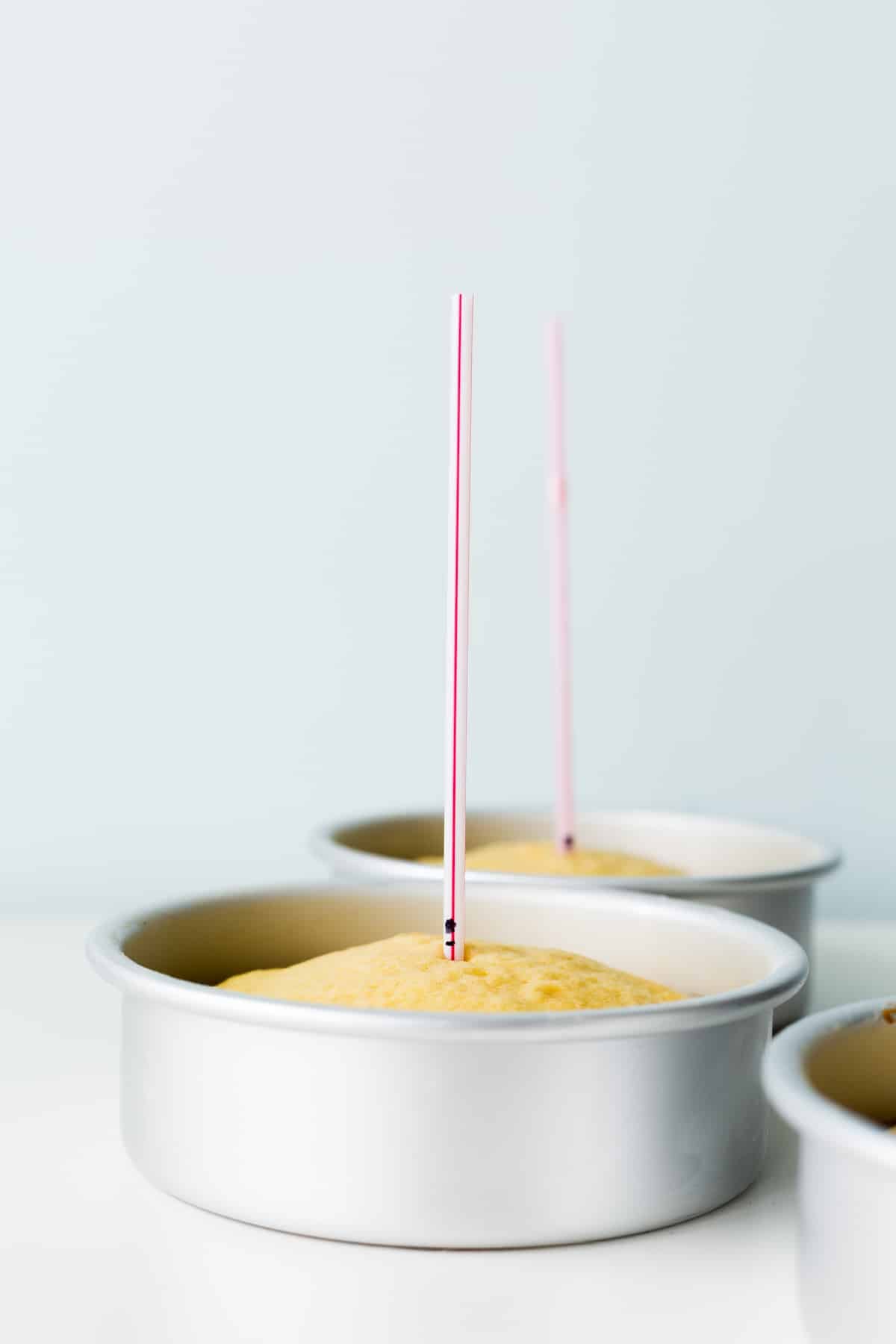
I used straws and a Sharpie marker to mark the heights of the cake, immediately after baking, and then after cooling. Then I measured the change in height. All the cakes lost a little height upon cooling, but go figure, the cake that wasn't dropped shrank the least (about 1-2 mm), while the dropped cakes shrank about 3-4 mm.
Basically, I observed more cake collapse when I dropped the cakes from 30 cm. That's exactly what I was expecting and the opposite of what Peter Barham claimed. Cakes are fragile when they come out of the oven. It seems pretty logical to me that if you drop a cake when it's most fragile, it will collapse a little from the shock. Right? I made this "quirky" video for you to illustrate my experiment.
Final Thoughts
By the way, looking at the inside of this cake, we see that I had large holes in the cake, but writing this post made me realize a few things: given the big bubbles inside and the spotting that I've been observing on the surface of my cakes (look at the 1st photo of this post again), I'm wondering if I'm working with too much leavener in my cake recipe. I use 2 teaspoon baking powder for 2 cups of flour, but some baking references suggest my recipe might only need ½ teaspoon per cup (so 1 teaspoon baking powder for 2 cups of flour).

This means my working recipe might possibly have more baking powder than is needed, specifically double. I have also been wondering if I need a touch more milk/wet ingredients in my recipe. Perhaps the batter is a little too thick and this is leading to pockets of air that can't easily be smoothed or tapped out before baking. All that to say: clearly, I need to make more cakes!
If you found this article about why cakes collapse helpful (or you liked any other recipe on my website), please let me know in the comments below. I love hearing from you!
Bell says
What about my favourite Jogurt cake? It collapses also!
Jairoop says
Hi Janice, Thank you for this post! I love to bake from the "science- based" angle too and this seems like home 🙂
I was just curious to know if you have experimented with vegan cake recipes. I have been trying a lot of recipes to make the perfect fluffy sponge cake, but something seems amiss, the fluff isn't happening!!
I would love to hear from you about this.
Janice says
Hi! So glad you enjoyed this post. I'm not a vegan baker but I would look into baking with aqua faba as an egg replacement if you want to make a fluffy sponge cake, which depends on eggs for leavening.
Tess Garraway says
I once saw a chap on telly showing how to drop a cake onto the counter after baking. I recall this was to make it more ‘even’ and ‘spongy’.
Cakes are naturally going to shrink after the heat is taken away, so I expect shrinkage anyway since cold condensed.
I like your experiments, but I’m still going to stick up for the science involved. Perhaps you’re crater like cake may have been evened by the drop? I’ve had sponges look rather careful too.
But I do do the drop now. As a matter of choice and course. I get a sponges result!
Jabeve says
I always drop my cakes from about 18 inches above the counter two or three times before I put them in the oven. This helps to remove the air bubbles and to bake evenly.
Sue says
For chiffon cakes, I’ve found that if I reduce the speed of the mixer to slow towards the final minutes of the beating of the egg whites, I don’t get big air bubbles in the final product.
Isabelle @ Crumb says
Phew. Glad to hear I don't have to resort to dropping my freshly-baked cakes on the counter to make sure they don't slump. 🙂 The recommendation sounded totally counter-intuitive, but I suppose it was worth a try, given that the hypothesis wasn't entirely outlandish. I do find a good tap *before* the cake goes into the oven definitely helps a lot with air pockets.
PS: If you need any help with ummm... disposing of your experimental cakes, I'd happily volunteer my services. In the name of science and all that. Obviously.
Olivia @ livforcake says
You know, I've been curious about this as well! Interesting to see that it actually causes it to collapse more. I love your baking science posts!! I am a bit of a baking nerd myself, so I love to read them. Super informative and I love the video!
Julia says
Dropping a cake seems so counterintuitive! I appreciate you sharing your results. My cakes are rather unpredictable. In fact, for birthdays, my family now requires me to use a box mix, since those are generally foolproof. 🙂
Liliana says
Very interesting post Janice. I always wondered why sometimes my cakes would just collapse when I took them out of the oven. I know I followed the recipes to the letter.
Great job with the video!
Janice says
Liliana, I think it could still be the recipe and not you 😉
Now that I've been dissecting recipes more, I'm currently questioning my go-to vanilla cake recipe that I've been using for years. I thought it was a good one, but now I think it could use some more work and be better!
Marlene says
I loved this! And you look very scientific and serious as you drop that cake onto the counter. I bet the impact send the cat running from the room!
So, I have a question/observation (trying to sound scientific -- ha!) ... it looked to me that you dropped the cake from a much greater height than 30 cm (maybe that was just for dramatic purposes in the video and not for the actual experiment? or perhaps I wasn't correctly gauging the height?). Regardless, I find it implausible that dropping a cake can stop it from shrinking ... if anything, I'd expect it to collapse a bit, cakes being delicate creatures.
I'm going to be sharing your video in my next Urban Cottage Weekend -- it's too good to keep to myself!
Janice says
Thanks for your comment Marlene! I don't know if you noticed in my video, but I had a tape measurer standing up on the counter next to me, in an attempt to properly drop the cake from a 30 cm height. I was trying to stick to that, although as I was doing it, I realized it was kinda hard to gauge on my own if I was actually holding the cake up exactly to the right height, even with the tape measurer there.
Clearly, I need a partner in crime 😉